

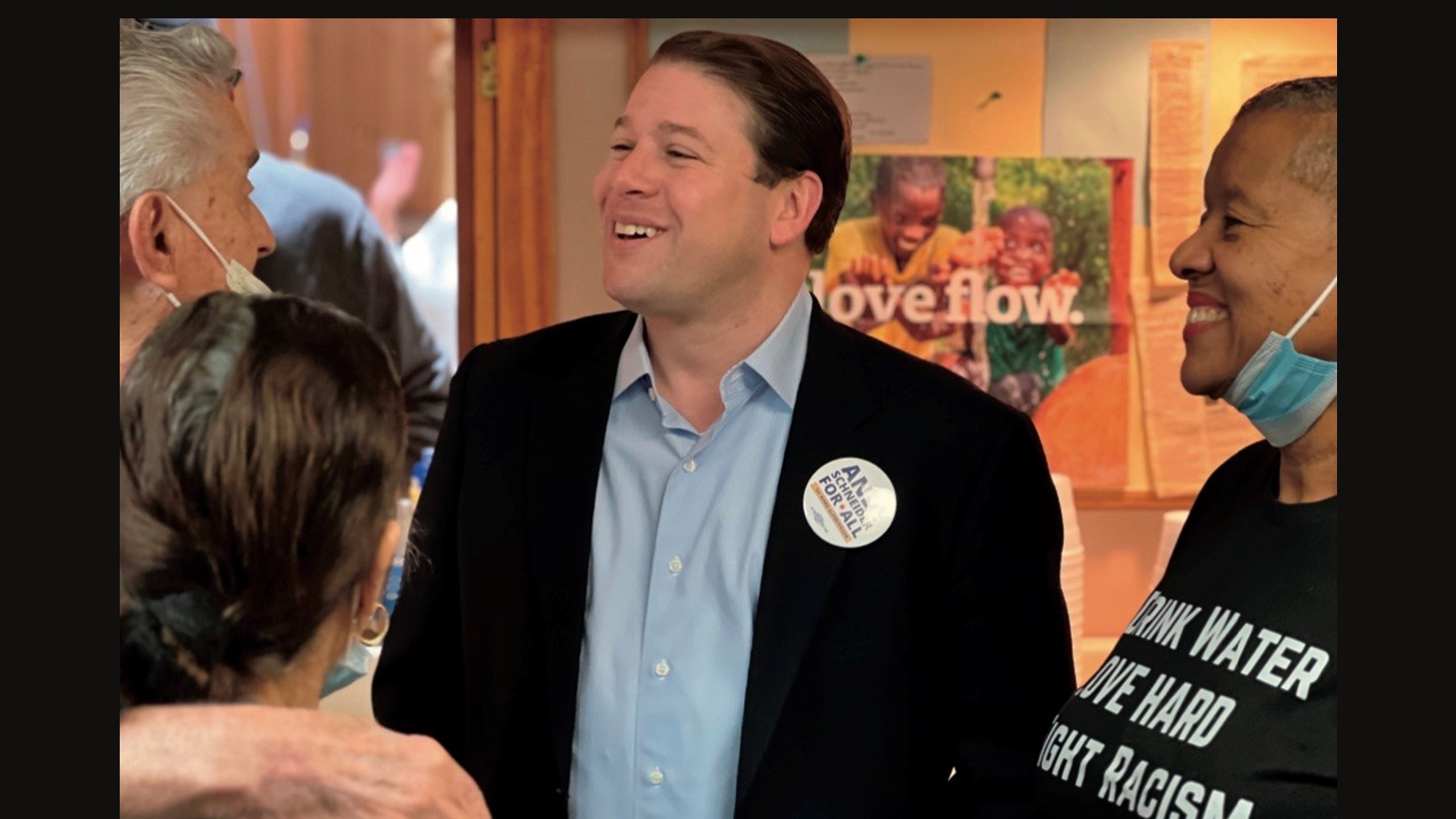
About the Candidate
Name: Stephen "Andy" Schneider
Date of Birth: 1980
Occupation: Editor & Publisher of Screen Magazine, President of Logan Square Preservation
Political Experience: 15 Year Community Organizer / Advocate, President of Logan Square Preservation
Political Party: Democrat
Website: andyforall.com
Candidate Q&A
Why are you running?
I am challenging incumbent Alderperson Daniel LaSpata. Like many, I supported Daniel four years ago but also, like many, I have been disappointed. The last two Alderpersons of the 1st Ward have pursued their personal agendas and ignored or silenced other voices. I know from my history organizing that listening to all in our community and working to build consensus is what delivers better outcomes for all of us. That’s what our communities deserve. That’s why I’m running.
What does this office do well, and what needs fixing?
To be clear, Daniel and I share the same progressive values and most (but not all) policy positions. But an Alderperson has two critical jobs that are necessary to improve the lives of the residents of the ward. They must be leaders on the City Council advocating for progressive legislation and a budget that reflects progressive priorities. We share that concern. They must also work to truly engage and organize in the ward not only to bring people together for the goal of civic engagement, but to ensure our neighbors are heard and respected. That has not happened in the 1st Ward, and our approaches to leadership will be profoundly different.
What is the most pressing issue facing your constituents and how do you plan on addressing it?
A top issue facing our neighborhoods is a lack of leadership. There is incredible talent and vision, rich artistic and cultural institutions, but also anxiety and sometimes fear among our neighbors. If we are effectively going to address our shared concerns, we must do it together. For the last 15 years I've brought our community together to harness our talents and input to deliver better outcomes. We can have both progressive leadership on the Council and robust community engagement. I have a demonstrated track record of listening to neighbors and fostering consensus. That's what I'll continue to do as Alderperson.
What specific steps would you take to ensure your office is accessible and responsive to your constituents?
Community engagement is an important part of being a responsive and effective elected official. In order to ensure my office is accessible to my constituents, I will take consistent outreach efforts such as canvassing, hosting town hall events, and pop-up engagement opportunities in local neighborhoods. Additionally, I will create resources to provide residents with necessary support services.
Community members should also have the opportunity to collaborate with me on participatory budgeting initiatives, so that their needs and priorities can be heard and included in the legislative process. By being proactive about connecting with the community and providing them a meaningful seat at the table, my office will become more accessible and responsive to its constituents.
Do you believe in the tradition of aldermanic prerogative, which gives each City Council member the final say on issues in their ward?
I believe aldermanic prerogative should be phased out. It’s important, however, that the process does not result in a centralization of decision making and a new mayoral prerogative. We should pursue additional checks on alderpeople and additional democracy to bring about an end to the practice.
Should the $1.9 billion budget for the Chicago Police Department increase, stay the same or decrease?
As dollars are limited, the Chicago Police Department must contemplate carefully how to best use its $1.9 billion budget for the greatest public benefit. Staying with the same budget is a reasonable option, considering the current economic climate; however, additional resources should be spent on new initiatives to support mental health services and co responders such as behavioral health professionals. Properly funding these services should reduce demand on police personnel and lead to cost savings in other areas over time.
Ultimately, public safety is of paramount importance and these added initiatives may provide an improved response when needed while helping to lower crime overall in the City of Chicago.
Should the city raise the Real Estate Transfer Tax on properties sold for more than $1 million to fund programs to help unhoused Chicagoans?
Yes, the city of Chicago should raise the Real Estate Transfer Tax on properties sold for more than $1 million in order to fund programs that can help unhoused Chicagoans. The current state of the housing crisis requires an equitable approach -- requiring those who have more to contribute a fair share to benefit our community.
This type of policy not only provides relief to those facing homelessness and poverty, but it also incentivizes greater engagement with local communities and responsible behavior from residents further up the economic spectrum. Raising the Real Estate Transfer Tax is one component of an overall strategy to tackle inequality and bring lasting solutions to Chicago's homeless population.
Should the city open and operate mental health clinics to provide free care to Chicagoans?
With the current mental health crisis in Chicago, a clear need for further investment and open access to robust mental health services is essential for both public safety and overall health of residents. The importance of providing free care to citizens cannot be overstated as individuals and families continue to struggle with conditions such as depression, anxiety, substance abuse, grief and other challenges.
Creating city operated mental health clinics would open up much needed treatments that are currently not long-term options for many uninsured Chicagoans. Such a move would ensure increased access to preventative care, diagnosis, monitoring and treatment for complications in addition to supporting a healthier and safer community on the whole.
How should Chicago build the 120,000 homes it needs for low- and moderate-income Chicagoans?
In order for Chicago to build the 120,000 homes needed for low and moderate-income residents, it is essential to actively engage with the community. Community engagement efforts should involve stakeholders from all relevant areas and seek consensus on matters such as land use plans, economic empowerment initiatives, and policies that support affordable housing.
Community engagement can also lead to innovative partnerships between local businesses, developers, governments, and nonprofits working together toward a community development goal in which everyone involved has a vested interest in the success of the endeavor. Community input should be considered throughout the process to ensure that construction efforts best work to serve the needs of the people they are intended to benefit.
What do you see as potential solutions to address the number of shootings in Chicago?
Community engagement is an essential approach to finding solutions to the number of shootings occurring in Chicago. It allows for community members to come together, discuss root causes of these issues, and build awareness around available resources. For example, many cities employ buy back programs which offer monetary compensation in exchange for firearms.
Additionally, through improved investment in education, sustainable employment opportunities for young adults, and cutting off the iron pipeline of illegal guns entering the city are other ways we can start making a constructive difference. Community engagement creates a platform which is necessary to create and support comprehensive strategies that stop shootings from happening.