

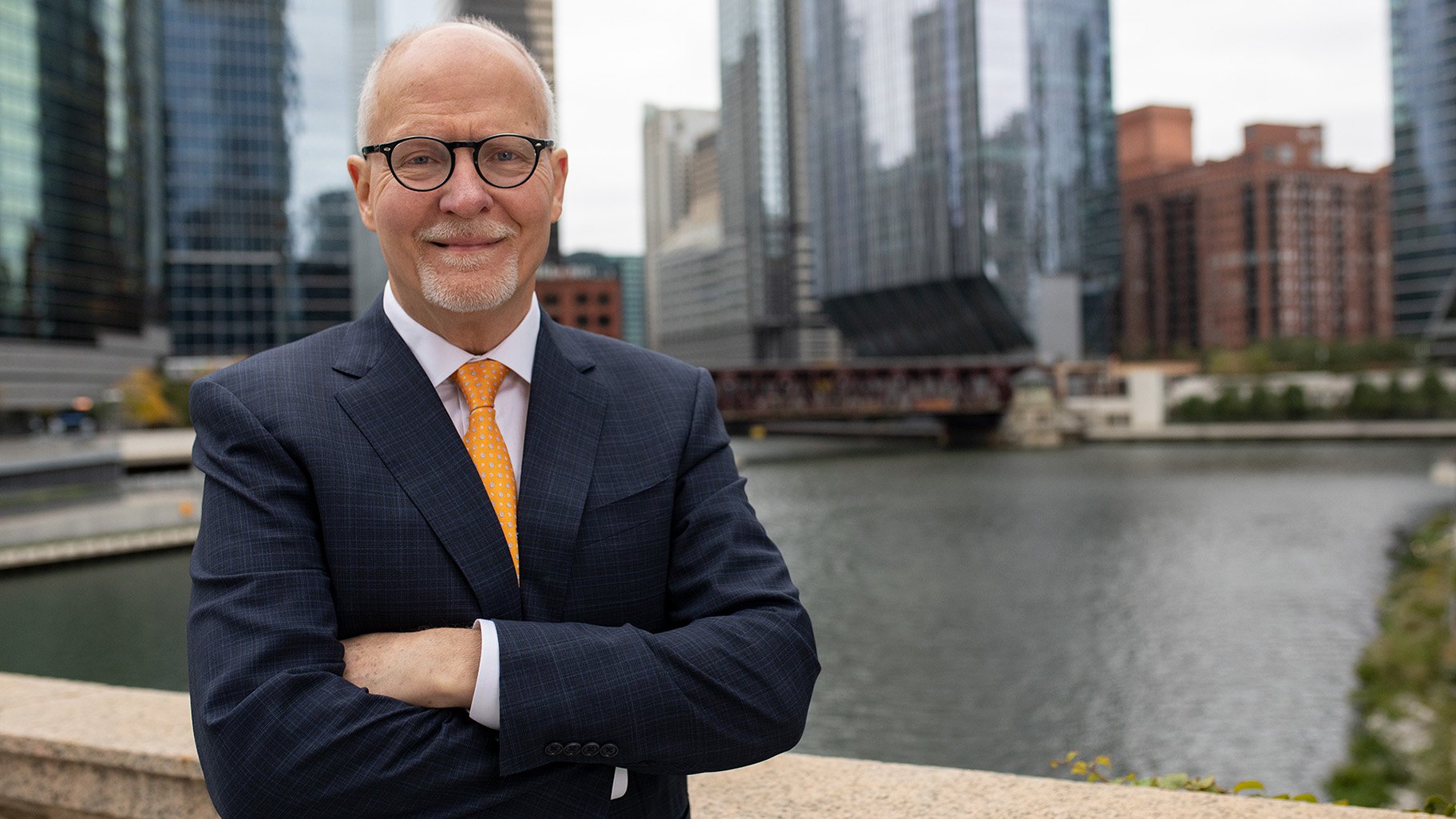
About the Candidate
Name: Paul Vallas
Date of Birth: June 10, 1953
Occupation: Consultant
Political Experience: Never held political office.
Political Party: Democrat
Website: www.paulvallas2023.com
Candidate Q&A
Why are you running?
Chicago is in crisis, due to years of ineffective leadership we have seen our great city deteriorate. I am the only candidate with an extensive track record in success of managing complex and large systems. I have the experience necessary to begin the work that needs to get done on day one of my administration.
What does this office do well, and what needs fixing?
What Chicago mayors do well is amass and wield raw power. What needs fixing is multifold and relates to what the Mayor and the Office of the Mayor prioritizes and wields that power for and how they go about doing it, most particularly as it relates to utilizing both the actual power and the leveraging opportunities and bully pulpit that comes with it. Current executive leadership has struggled to attract and retain top line expertise and talent because of management style.
The prioritization of marketing and communications functions and staffing has resulted in a critical under-resourcing of policy, program and operational expertise. Where the office has individuals with subject matter expertise, they are under supported in the effort not merely to develop policy but drive it to full implementation and scale to achieve notional program goals. Community relations is mechanistic – too often bolted on rather than baked into process and decision-making. The City Council is approached as an inconvenience rather than a true partner with whom dynamic engagement is seldom understood and regarded as a force amplifier for improved policy.
What is the most pressing issue facing your constituents and how do you plan on addressing it?
The most pressing issue facing constituents is public safety. Public safety is critical for the success of Chicago, because right now residents do not feel safe traversing their own city. A clear strategy is necessary to rebuild trust with our community. As Mayor I will work to ensure that we have enough officers to keep local police beat integrity and provide effective public transit security. This means at minimum restoring Officer strength to pre-2019 levels of 13,300 and replacing privatized CTA security with 600-700 additional Officers to support a new well-resourced Public Transit Police Unit.
This will extend beat integrity to mass transit with enough officers to cover every station, platform and to ride trains both in uniform and undercover. Restoring the ranks will also allow for the expansion of the Detectives Division and allow for dedicating more officers to violent crime investigations. As Budget Director, I expanded police strength to 13,500 and helped create a well-resourced CTA Transit Police Unit as part of the City’s Community Policing initiative, resulting in a historic reduction in murders and other violent crime.
What specific steps would you take to ensure your office is accessible and responsive to your constituents?
Like I have in every position I have held, I will work closely with local community members and coalitions as we work together to make Chicago a city that works for every Chicagoan. In numerous constituent policy realms, I have proposed commissions composed of community and policy experts with advisory, reporting and in some cases hearing authority, whose expertise and input MUST be incorporated and reflected in policy decision-making, implementation and accountability by the relevant department or program I have always welcomed public insight and I will look to extend this into my time in City Hall.
As mayor I will frequently seek to collaborate with the true stakeholders of our city’s success, the residents of Chicago.
Do you believe in the tradition of aldermanic prerogative, which gives each City Council which gives each City Council member the final say on issues in their ward?
I respect aldermen and the unique perspective they bring as they represent their community. I do believe however that aldermen should not have the ability to veto projects simply because they want to. I will continue to give the aldermen the respect they are due as equally elected officials but will ensure that my administration conducts effective oversight to ensure aldermanic prerogative does not hinder the growth of Chicago.
A redirection of the traditional power reflected in the customary practice of prerogative into a more independent, robust legislature providing true policy input, legislative oversight and public accountability will better serve the needs of the City as a whole.
Should the $1.9 billion budget for the Chicago Police Department increase, stay the same or decrease?
It can stay the same. In effect, more can unquestionably be achieved with no more money. A scrub of CPD’s budget – which is opaque and non-aligned with strategic objectives and tactical needs because under this administration there is no clear strategy – will unquestionably yield a large amount of waste or ineffectually allocated resources. We need to monetize that waste and direct it to efficient and highest uses serving the department’s core mission.
For example, through more effective management, we actually can achieve a decrease in overtime costs and the acquisition of more full time officers to fill these gaps in coverage and department vacancies. Through aggressive and proactive risk management, we can tamp down the ceaseless outflow of taxpayer money for legal settlements and judgments totalling many hundreds of millions, and often so far over budget that we engage in the strongly disfavored practice of borrowing to meet. While the budget is a large percentage of the Corporate Fund and is the largest department in the City in numbers of employees, the odd structure of our larger governance system skews perceptions of its size.
The police budget is approximately 6.7% of the collective $28 billion budgets of all of the taxpayer-funded components that people regard as City government – the core corporate City and all of its sister agencies. From that perspective, while costly, it is not terribly out of line comparatively.
As we get hold of waste and inefficiencies, we should also be examining how to right size what we call upon the police, such that we focus the department on core mission and, where opportunities exist, repurpose parts of its budget to allocation partner agencies or functions with the greater expertise to coordinately handle matters outside the trained competencies of police officers.
Should the city raise the Real Estate Transfer Tax on properties sold for more than $1 million to fund programs to help unhoused Chicagoans?
I value the intention of this proposal. What prompts it is the unconscionable fact, rightfully decried by alders across the ideological spectrum, that this Administration has failed utterly in fashioning a holistic plan for the expanding problem of homelessness. A special tax will not itself solve the foundational problem of having no plan.
Moreover, the money for assisting those experiencing homelessness in Chicago can be done through diverting and dedicating existing resources such as the TIF surpluses. Through more effective allocation of fiscal resources we can solve the homeless crisis that Chicago is facing without raising already inflated municipal taxes.
Should the city open and operate mental health clinics to provide free care to Chicagoans?
Unquestionably yes. As mayor I will seek to reopen all the closed mental health clinics and ensure that there is a community based mental health center in all of our police districts. The city needs to provide free care to any Chicagoan that cannot afford it and for those with insurance, bill the appropriate agencies effectively. Through the payments received from Medicare/Medicaid and private insurance the mental health clinics will be financially sustainable with minimal city subsidy. My administration will focus on improving how the city does the billing process from the state and federal level.
How should Chicago build the 120,000 homes it needs for low- and moderate-income Chicagoans?
The CHA has not been an effective housing safety-net and developer for low to moderate income housing for a generation. Solutions for this problem adversely impacting Chicagoans in all parts of the City must start in re-activating the CHA. On the private development front, recent audits of the City’s Office of Inspector General have highlighted the fact that the higher-income housing developments can readily buy their way out of affordable unit requirements, and that the resulting pool of funds are not effectively leveraged for affordable housing development to meet specific community needs. I will fix that.
Additionally, I have always been a fan of allowing for the development of garden unit apartments, which allows property owners to convert underutilized space for conversion to an apartment. Collectively, these measures can quickly pump over 100,000 affordable housing units into the rental market in Chicago to assist moderate-income Chicagoans.
What do you see as potential solutions to address the number of shootings in Chicago?
I believe there is a potential to reduce the number of shootings in Chicago by returning to a strong model of community policing. Restoring beat integrity allows for the police officers walking those beats to become familiar with the community, build connections and rebuild trust. Those beats, which have not undergone strategic assessment and re-alignment for generations, should be examined to meet contemporary geographies.
Together, this will assist in engendering a safer environment that, with the right CPS and community organization and social service partnerships providing safe havens of co-curricular engagement, we can open to youth – from which violent crime disproportionately emanates – pathways to productive futures.