

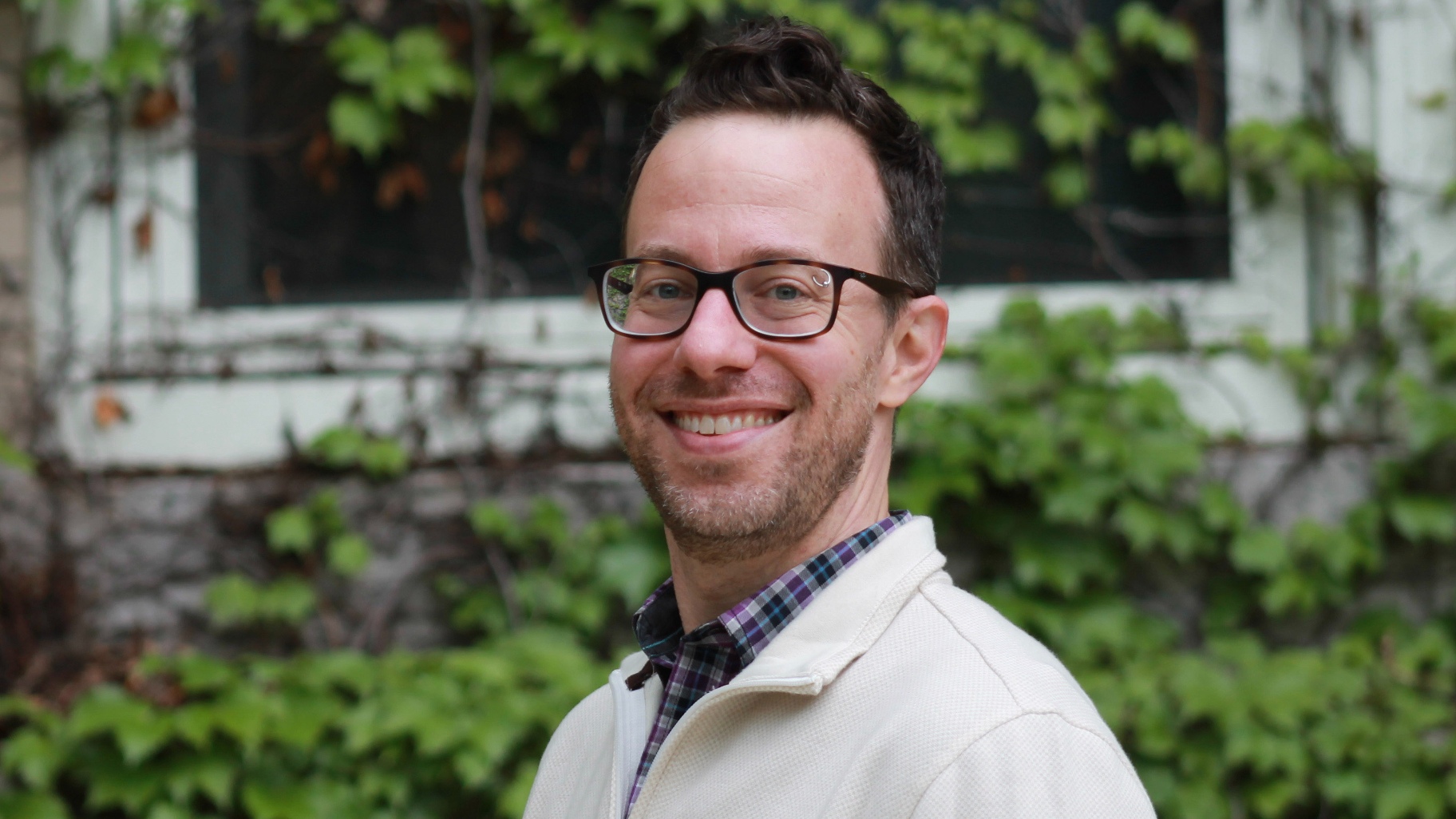
About the Candidate
Name: Nick Ward
Date of Birth: Aug. 1, 1981
Occupation: Candidate for 48th Ward Alderman; previously booking manager at Young Chicago Authors
Political Experience: Secretary and Community Representative on the Goudy Elementary Local School Council
Political Party: Democrat
Website: nickward48.com
Candidate Q&A
Why are you running?
I’m running for Alderman in the 48th Ward because I believe that Chicago must be a city where everyone has what they need to live a safe, happy, healthy life. I’m running because our next alderperson needs to provide quality ward services and take care of residents’ day-to-day needs while leading on City Council with clear policy plans to address the concerns of the ward.
As a volunteer with the Uptown-Buena Park Solidarity Network, I delivered groceries to seniors and gave out propane tanks to homeless residents during the Polar Vortex. I saw the need for strong ward services and a proactive alderman to get people resources. I worked in coalition with many community organizations to fight for affordability, police accountability, equitable education, and environmental justice. These experiences taught me how a city budget is formed and how to analyze complex policy, preparing me to take on the role of legislator.
For the past four years, I worked at Young Chicago Authors (YCA), a thirty-year old arts organization that teaches creative writing to Chicago Public Schools students. YCA’s students and colleagues told me on many occasions how our work saved their lives. I believe that investing in more poetry, arts, athletics, robotics, chess programs, and more can have a profound impact on the life of a young person.
Since 2020, I’ve been an elected Community Representative on the Goudy Elementary Local School Council. It’s an incredible school where over 40 languages are spoken. It’s also a school facing some big challenges. I formed a Housing and Enrollment Committee to study why so many students were leaving the school. We documented how rising rents in the neighborhood contributed to an enrollment decline at nearly double the rate of Chicago Public Schools as a whole. In one instance, the conversion of an affordable building into luxury studios led to an enrollment decline of 90 students in four years.
I announced my campaign for 48th Ward Alderperson in January of 2022 because I am confident that, with the right kind of leadership, we can better address the issues that affect us all: both the citywide priorities and the issues block by block in every neighborhood. If I’m elected, a key priority of mine is to provide comprehensive and compassionate ward services to everyone in our community through the ward office, in the same way that we provided those services as volunteers in recent years.
What does this office do well, and what needs fixing?
I will continue the great work Alderman Osterman did in supporting arts and cultural events and organizations in the ward and communicating regularly with constituents through his weekly newsletter. I am excited to bring a proactive approach to the 48th Ward office by expanding outreach to ward residents and strengthening relationships with city officials to ensure that constituent issues are addressed quickly and effectively. I will also build upon my strong relationships with sitting alderpeople, unions, and community organizations to draft and pass legislation that addresses critical policy issues and serves the people of the 48th Ward and Chicago.
What is the most pressing issue facing your constituents and how do you plan on addressing it?
Affordability is the most pressing issue facing the people of the 48th Ward, from renters to owners to families and seniors. As Alderman, I will support expanding the Affordable Requirements Ordinance by raising the minimum affordability requirement and requiring more family-sized units to be built on site. I support the Just Cause Ordinance, which would eliminate no-cause evictions and protect families at risk of displacement. I also support lowering property taxes for working and middle class people and preserving two- and three- flats near transit, which are among Chicago’s biggest sources of naturally-occurring affordable housing.
What specific steps would you take to ensure your office is accessible and responsive to your constituents?
Delivering efficient, compassionate, equitable constituent services is my top priority as alderman. I appreciate Alderman Osterman’s weekly newsletter and will continue the practice. I will also hold regular town halls and keep open office hours, including on the weekends and on weeknights. I will hire an office staff that reflects the racial and linguistic diversity of the ward and can provide culturally competent services to constituents from marginalized communities.
From day one, I will create transparent, accessible participatory budgeting and community zoning processes so that 48th Ward residents have a say in our ward’s decisions. I will introduce the practice of releasing public explanations of zoning decisions, similarly to current alderpeople like Matt Martin.
I will continue building strong relationships with community organizations, unions, mutual aid groups, and block clubs to communicate with constituents, especially low-income, houseless, senior, and immigrant residents who can be harder to reach. I also believe our alderperson must be proactive, so I will regularly canvass the community.
Do you believe in the tradition of aldermanic prerogative, which gives each City Council member the final say on issues in their ward?
I believe aldermanic prerogative should be reformed to be more transparent, uniform, and democratic. I believe that the people of the 48th Ward should have the final say in what gets built, licensed, or permitted in the ward.
Should the $1.9 billion budget for the Chicago Police Department increase, stay the same or decrease?
Everyone deserves to feel safe in their home, school, workplace, and community. I believe that Chicago Police officers are saddled with too many responsibilities, and that we need to shift many of those duties to administrative, mental health, and social service workers so that officers can focus on violence prevention. I support allocating funds towards community-led violence prevention initiatives and domestic violence and substance abuse programs.
I also support reopening the public mental health clinics and establishing Treatment Not Trauma, which would create a non-police crisis response system for mental health related emergencies to better serve our neighbors and reduce their exposure to the criminal justice system. These strategies would not only provide a non-violent, dignified, and evidence-based model to treat people undergoing mental health crises, but also create hundreds of good-paying unionized city jobs.
We also need to invest in expungement clinics and rehabilitation programs for formerly incarcerated people and work with federal, city, and state agencies to allow residents with criminal records to access employment, housing, and other social services.
Should the city raise the Real Estate Transfer Tax on properties sold for more than $1 million to fund programs to help unhoused Chicagoans?
Yes. I support Bring Chicago Home because I believe that homelessness is the result of policy choices. Our houseless neighbors deserve permanent supportive housing and mental health and social services. Bring Chicago Home secures a permanent funding stream to ensure that these services will last for years into the future.
Should the city open and operate mental health clinics to provide free care to Chicagoans?
Yes. Everyone deserves to be treated with care, dignity, and respect, especially folks who are undergoing mental health crises. I fully support reopening the public union-staffed mental health clinics.
How should Chicago build the 120,000 homes it needs for low- and moderate-income Chicagoans?
I believe Chicago needs to prioritize building and rehabilitating more homes, especially family-sized units. I support requiring developers building under the Affordable Requirements Ordinance to build their affordable units on site. I also support expanding funding for preserving and rehabilitating existing housing stock that is affordable.
What do you see as potential solutions to address the number of shootings in Chicago?
I strongly support funding community-led violence prevention programs like the Peace Book Ordinance championed by GoodKids MadCity and other youth-led organizations. I also support common-sense gun reform at the state level.
I believe that addressing the root causes of violence by meeting peoples’ basic needs, like housing, food insecurity, health care, and more will increase public safety in Chicago. Decades of disinvestment and the historic criminalization of Black youth, particularly young men, has let down Chicago’s young people. I will address the massive un- and under-employment of Black and brown youth with a multi-faceted approach, including expanding public-sector unionized jobs,investing in workforce development training. We must also stop criminalizing youth of color and preventing them from accessing robust public amenities. For a significant portion of this summer, our youth did not have access to their neighborhood swimming pools due to understaffing and underfunding.
I believe CTU’s Green Schools for Chicago program can tackle many of the issues of underemployment, community health, and public safety that are at the heart of this question. The program will lead to better community health outcomes, reduce violence, and provide necessary job training and workforce development.
Should the city do more to encourage residents to live close to where they work and shop by building dense multi-unit apartment complexes near transportation hubs?
Yes.
Should the city prioritize the construction of bicycle lanes and encourage people to use bicycles to commute to work?
Yes. As a cyclist, I feel unsafe on our city’s streets, and I have spoken with many drivers, cyclists, and pedestrians in the ward who feel the same way. I’ve also spoken with residents who wish they could walk, bike, or take public transit regularly, but don’t because it feels more safe and efficient to drive. Our ward and city’s lack of protected bike lanes harms everyone. I support expanding protected cyclist and pedestrian infrastructure so that people feel safe on our streets and sidewalks.
What steps should the city take to prevent Chicago’s shoreline from eroding further?
I’ve talked with many voters in the 48th Ward who are extremely concerned about shoreline erosion and its negative effects on residents who live near the lake and the loss of beaches and habitats for wildlife. I will work to install erosion control measures and retaining walls to preserve our beaches and prevent rising lake levels from further eroding the shoreline.
In my ward, I will work with property managers and condo associations along Sheridan to secure funding to ensure the structural integrity of lakefront high-rise buildings. I will also work with community groups like the Edgewater Environmental Coalition and Berger Park Advisory Council to plant native plants and establish a natural shoreline.