

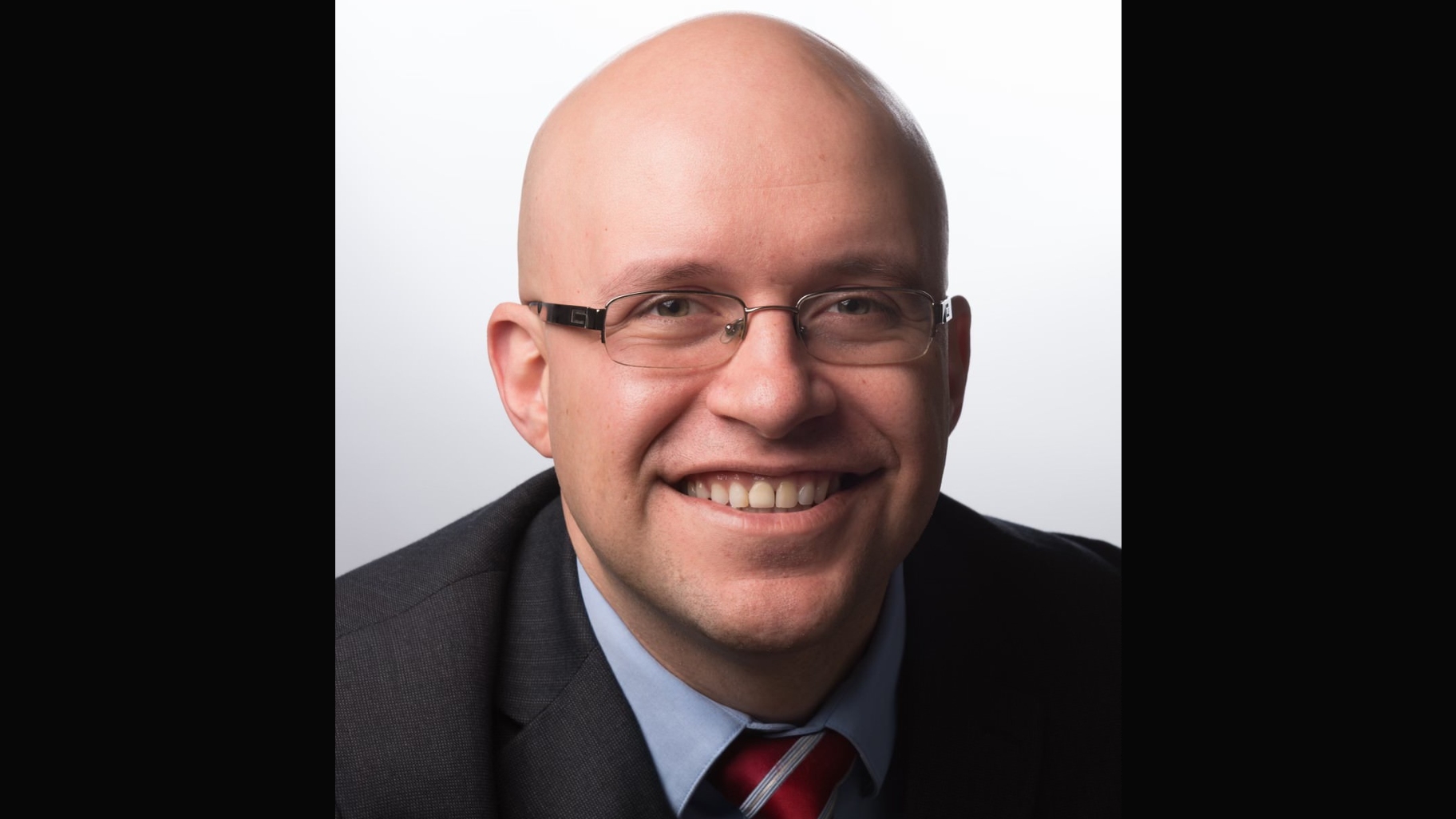
About the Candidate
Name: Michael D. Rodriguez
Date of Birth: 8/31/1978
Occupation: 22nd Ward Alderman
Political Experience: 1 term of 22nd Ward Alderperson; 2 terms as 22nd Ward Democratic Committeeperson
Political Party: Democrat
Website: mikerodriguez.org
Twitter | Facebook | Instagram
Candidate Q&A
Why are you running?
When I first ran for this office four years ago, I campaigned on working to elevate the struggles of working families, to push for equity around our city, and to reduce the plague of violence in our communities. One year into my first term, our whole world changed. We were in triage mode, particularly in the 22nd Ward which was home to the highest rates of COVID positivity in our entire state. We are still grappling with the impact of the pandemic, but those issues that were at the fore of my agenda when I first ran continue to guide me.
I am running to continue the effort to improve the quality of life of working class people in the city of Chicago. In the next term I will continue to fight for more violence prevention dollars, for a Department of the Environment, for more mental health supports, for a non-police first response, for capital/infrastructure investments in marginalized communities, for more multilingual staffing where it is needed most, and for a more welcoming city to immigrants. I will do this by helping to organize my colleagues and our communities for what’s needed to help the working families of my ward and our city.
An Alderperson wears many hats and all of them matter to constituents. I will continue to prioritize running an efficient, responsive and empathetic office that address all constituent services requests in a timely manner, links residents with the resources they need to thrive in their community, maintains an open door and regular Ward nights, and forcefully advocates for the 22nd Ward getting resources for our neighborhood parks, schools, libraries and infrastructure. Further, a neighborhood cannot thrive if its residents do not feel safe. To that end, I will continue to coordinate closely with community based groups and the Chicago Police Department 8th and 10th Districts to ensure our community has the resources and information it needs to keep our community safe.
What does this office do well, and what needs fixing?
I am proud of the work my entire team has done to deliver services to residents and to advocate for the interests of 22nd Ward residents and all Chicagoans in City Council. We have an open door policy and prioritize being accessible to residents. The early days of the pandemic were a test of our ability to mobilize and serve our community and we rose to the challenge by developing a robust task force that tackled all the issues brought on by the pandemic. We met on a weekly basis during the height of the pandemic and meet quarterly now. Our collective power was inspiring going from one of the hardest hit communities to some of the black and Latino census tracts with the highest vaccination rates in the city. While I hope we are finally on the other side of the pandemic, I am committed to taking the organizing work we did there and using it as a model to address other issues in our community.
The relationship between Alderpersons and the Mayor needs fixing. We need a true partner and collaborator in that office to get things done. We need someone who knows how to cultivate relationships to get things done at multiple levels of government. (should we skip on going after the Mayor? Alternatively we can go with below, still a slap at the mayor but a step away)
The relationship between elected officials at various levels of government needs fixing. We need true partnerships and civility to get things done. We need leaders who know how to cultivate relationships to get things done at multiple levels of government.
What is the most pressing issue facing your constituents and how do you plan on addressing it?
Chicagoans deserve to feel safe in their homes and in their communities. If you were to poll the residents of the 22nd Ward, safety would rightly be at the top of that list. However, all of our biggest challenges are linked, and it is my job to make sure that residents and other public leaders understand that tackling safety requires addressing so many other fundamental issues in our city. Shoring up our public schools, economic development in our communities, addressing the mental health needs of vulnerable Chicagoans, improving the relationship between members of law enforcement and the communities they serve, and so many other challenges must be tackled if we are to truly make Chicago a safe city for all of its residents.
What specific steps would you take to ensure your office is accessible and responsive to your constituents?
We have run an active, transparent and accessible office from Day 1. Our residents know that we will be responsive to their needs and that we are committed to not only addressing problems, but to working with them collaboratively on moving our communities forward. Every part of our ward has an advisory committee on zoning changes made up of residents, experts and community leaders. My office is open Monday to Friday 9am to 5pm, with evening hours on Mondays. My office hosts workshops in Spanish and translated into English, and vice versa when appropriate. I knock on doors throughout the year, not just during campaign season, to remain as close to the issues of my ward as possible and to be held accountable. Myself and my staff proactively survey our ward to address issues before constituents bring them up.
Do you believe in the tradition of aldermanic prerogative, which gives each City Council member the final say on issues in their ward?
While I think that Alderpeople should be the City’s main point of reference for what is best for their particular Ward and community, we have to have some overarching priorities as a city that trump aldermanic prerogative. On the issue of affordability, for example, we have seen many Alderpeople refuse to allow affordable units in their neighborhood which continues an ugly legacy of segregation in our city. I believe in a government with checks and balances and believe the legislative and executive branches of government share power and authority.
Should the $1.9 billion budget for the Chicago Police Department increase, stay the same or decrease?
Dealing with crime and violence in our city should be a top priority for every elected official and stakeholder in Chicago. That said, I do not think we need to increase the CPD budget outside of inflationary/contractual increases, or increases that directly achieve benchmarks of the Consent Decree. There are creative ways to get more police officers on the street, like disbanding SRO’s, redirecting citywide units to local units, redistributing police resources equitably where crime exists, and by moving officers on desk jobs to the beat and hiring civilians to do administrative tasks. I support rearranging funding priorities to support preventative efforts that are proven to decrease crime: violence prevention, street based intervention, mental health, jobs programs, and the like. I would, however, like to see an increase in the number of detectives working to solve cases as our case closure rate is incredibly low.
Should the city raise the Real Estate Transfer Tax on properties sold for more than $1 million to fund programs to help unhoused Chicagoans?
I am an enthusiastic supporter of the Bring Chicago Home Ordinance that would do just that.
Should the city open and operate mental health clinics to provide free care to Chicagoans?
Yes.
How should Chicago build the 120,000 homes it needs for low- and moderate-income Chicagoans?
The city must force developers to build affordable units on site when they begin new projects. This burden must be spread throughout our city. And we must get creative in increasing our housing stock. That means building more density near transit hubs, allowing for the Alternative Dwelling Unit pilot program to expand city-wide, and re-imagining how we do development - particularly in under-resourced communities.
We need catalytic community-centric development projects that will not only invest in south and west side communities but will also encourage and spark other developments in their immediate areas. On 43rd and Cicero Avenue we are reversing decades long trends of housing disinvestment and segregation. Phase one development of the former LeClaire Courts Housing projects will include 200 units of affordable housing Phase I across the street from a newly built school, a Tony’s Finer Foods grocery store in a food desert, a federally qualified healthcare center and more. We have spent a significant amount of time with this diverse community, planning this development and have near universal support. For years, housing projects were placed on the other side of the train tracks or expressways and were largely forgotten and disinvested in; this project however takes a holistic view at building a community and incorporates community benefit developments where the private sector is attracted to invest and improves quality of life for future residents and the current community.
This will be the largest development on the southwest side of Chicago since the creation of Midway airport and we are already seeing signs that this investment has paved the way for other attractive developments including new restaurants on the corner of Archer and Cicero and on the corner of 47th and Cicero avenues. It is not enough to build affordable housing, but the surrounding communities need to be developed in a way that offers enhanced quality of life for the working class residents of our city who need affordable housing options.
What do you see as potential solutions to address the number of shootings in Chicago?
We must take a multi-pronged approach to addressing the public safety concerns that are top of mind for all Chicagoans. I have been a vocal advocate throughout my career for reinvesting in communities, specifically in organizations that are focused on violence prevention programming. My commitment to this issue predates my career as an alderperson. I was named one of 12 national “Champions of Change” in Youth Violence Prevention by President Barack Obama.
We cannot talk about public safety without also addressing the problems with the police department as tackling those is fundamental. We already have a blueprint for how this should work in the consent decree that the police department was forced into but, unfortunately, they have been embarrassingly far behind in enacting all the required reforms and continue to have issues engaging the community as a result. We must push CPD brass to follow through on its obligations and must also ensure full implementation of ECPS. Without better community relationships and increased accountability, we will not have safer streets. I have witnessed time and again community members tipping police off, leading to solving crimes.
We must have strategic data-informed methods for the police to improve services. The department’s case closure rate is well behind that of other cities. To help address this issue, we need to hire more detectives. Additionally, if we can make steps to improve the relationship between police and the community, we will have the level of cooperation necessary to solve crime in our neighborhoods.
How can the city better serve Spanish-speaking residents?
This is an issue of incredible importance to me. The heart of the 22nd Ward — Little Village — is the largest Latino neighborhood in the Midwest. All levels of government must not only provide language assistance to Spanish-speaking and other non-English speakers, but we must be proactive. Members of these communities often do not feel a part of the system and we must commit ourselves to going into neighborhoods and seeking to engage. After Arise Chicago organized efforts for workforce justice for El Milagro workers, collectively we successfully advocated for more bilingual staff in the Office of Labor Standards (OLS). More needs to be done at OLS and at city departments across the city to better serve my neighbors and all non English speaking residents of our city.