



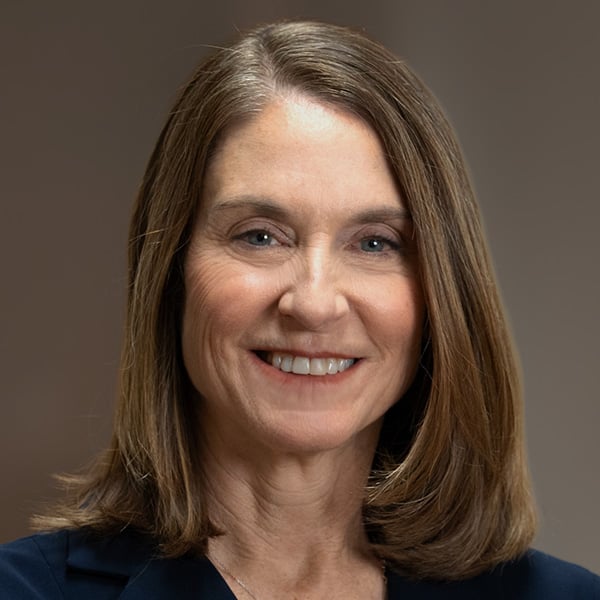
Candidate Q&A
Why are you running?
The 9th District deserves a representative who shows up to do the work. I got into politics after my husband was in a car accident that left our family drowning in medical debt after the insurance company tried to cancel our policy. I wanted to make sure nobody else went through that pain. Over 13 years in the General Assembly, I have taken on the biggest bullies, including the insurance lobby and corporate polluters, and I have won. My approach is about more than just progressive values. It is about progressive results. A non-partisan study named me one of the most effective legislators in Springfield. I have passed nearly 200 bills into law by doing the hard work of negotiation. This is why over a dozen advocacy groups named me their Legislator of the Year. It is also why nearly 100 local leaders like Rep. Brad Schneider and organizations like Elect Democratic Women have endorsed my campaign, including the Chicago Tribune. This is not a time for on-the-job training. We cannot afford a representative who is focused on building a personal brand or chasing headlines. I am a proven legislator with the track record to show for it. I am ready to bring that steady and effective leadership to Washington on my very first day.
What do you think is the most pressing issue facing your constituents and how do you plan on addressing it?
Grocery prices and the cost of living remain unacceptably high, and families feel the strain daily. To improve the economic outlook, we must act decisively. First, we need to lower costs by reversing policies that drive prices up. Rolling back tariffs would provide relief for families and small businesses. Health care costs must also be addressed. In 13 years in Springfield, I’ve passed nearly 200 bills protecting consumers, including part two of the Healthcare Protection Act, which bans insurers from using premiums for CEO bonuses, and a law capping out-of-pocket insulin at $35. In Washington, I will reinstate ACA subsidies and cap prescription drug costs for all. Second, we must tackle major household expenses like housing and childcare. In the Senate, I’ve fought for affordable housing and renter protections to ensure every family has a stable home. I support universal childcare and pre-K to ease one of the highest costs families face. These investments strengthen our workforce, support parents, and create good jobs in growing industries. Third, rising productivity must lead to higher wages. Workers have delivered more value for decades while paychecks stagnate. As a former union member, I’ve passed laws allowing graduate researchers to unionize and requiring wage transparency. Now, we must raise the federal minimum wage and pass the PRO Act to protect the right to organize nationwide. By lowering costs, expanding opportunity, and ensuring fair pay, we can restore economic security for all American families.
What is one unique challenge your district faces and how do you plan to address it?
Our country is in crisis, and this moment demands a fighter, someone who listens and delivers. For the past 13 years, I’ve worked side by side with constituents, advocacy groups, nonprofits, and local small businesses to make sure our state responds to the real needs of our district. I took on the insurance industry in Springfield and passed legislation reining in their worst abuses to bring down insurance costs. When healthcare became more expensive and harder to access, I cut prior authorization requirements and gave the state the authority to rein in excessive premium increases. As housing costs soared, I created a fund to help Cook County build more affordable homes. When families raised concerns about flooding in their neighborhoods and plastic pollution along Lake Michigan’s shores, I banned certain single-use plastics and secured millions in funding for stormwater improvements to prevent future flooding. Because of my leadership on healthcare, affordable housing, and the environment, more than a dozen organizations have named me Legislator of the Year. In Congress, I will continue to lead, delivering results and fighting for the issues my constituents face every day.
What do you think federal immigration reform should look like?
Trump’s ICE agents are terrorizing communities like mine with fear, intimidation, and violence. I have not stood on the sidelines. I authored legislation to ensure ICE agents hired during this administration can never wear a police badge in Illinois. In our state, law enforcement is built on trust, community protection, and de‑escalation—principles fundamentally incompatible with the tactics we’ve seen from ICE. In addition, I championed nation-leading protections for people at daycares, hospitals, and courts. In Congress, I would support eliminating ICE and holding the Trump Administration accountable. When we take the majority, Democrats must advance immigration reform that values compassion over cruelty. We need an immigration system that keeps families together, prioritizes swift processing of work authorizations, green cards, and asylum claims, and provides a clear, accessible path to citizenship for otherwise law-abiding people who are already part of our communities.
How should Congress address the rising costs of health care?
The longer we wait, the clearer it becomes that our healthcare system is broken, and it’s not improving. Premiums keep skyrocketing, more doctors are leaving traditional insurance to offer boutique services, venture capital is buying up hospitals and practices, and drug and insurance companies are prioritizing profits over patients. This system is unsustainable, leading to worse health outcomes and leaving too many people behind. It has been my main priority to lower the cost of healthcare in Illinois. I’ve been able to pass dozens of laws to expand insurance coverage, cut prior authorization requirements, ban junk insurance plans, and expand access to mental healthcare. In Congress, I support working towards a Medicare for All system because it guarantees healthcare access for every person and refocuses our system on keeping people healthy, rather than generating revenue. As a leader in healthcare policy in Illinois, I am committed to working with my colleagues in Washington to accomplish that goal. In the meantime, I would support restoring the ACA subsidies, capping prescription drug costs, and eliminating medical debt.
What approach would you take on tax policy and what is your top priority?
Right now, our tax laws are stacked against regular working families. Think about it: teachers and first responders actually pay a bigger chunk of their income in taxes than the ultra-wealthy. The system keeps giving breaks to the wealthy and well-connected, which just keeps financially crushing the middle class. In Illinois, I’ve passed crucial legislation to reduce the financial burden on working families by making healthcare more affordable, increasing worker wages and paid leave protections, and increasing affordable housing. In Washington, I will fight for a more progressive tax system to fix growing income inequality. That means increasing the Earned Income Tax Credit and Child Tax Credit. That means billionaires and the ultra-wealthy would pay more, and we'd close corporate tax loopholes. We can use that money to fund vital services like healthcare, making college tuition-free, building affordable housing, and expanding social services. Income inequality is the worst it has been in decades, so we need to use our tax policy to level the playing field and make sure working families have a real shot at getting ahead.
Is the House currently using its oversight powers in the way it should be? What areas of government need more or less oversight?
Congress has failed in its role as a coequal branch of government, becoming a rubber stamp for the Trump administration's abuses. This demands an immediate, dramatic increase in executive branch oversight, from Cabinet agencies to independent offices. For example, HHS under Robert Kennedy Jr. promotes dangerous vaccine skepticism, undermining public health, while Linda McMahon has worked to dismantle public education at the Department of Education, and officials like Pete Hegseth bypass accountability, operating with a “shoot first, tell Congress later” attitude. However, the most critical and timely oversight is needed for the unchecked expansion and misuse of ICE. ICE has transformed into an unaccountable force, terrorizing communities with little transparency or congressional scrutiny. Alarming reports reveal a systemic lack of training for the over 12,000 ICE and Border Patrol agents hired since the Trump administration began. This massive, rapid expansion with inadequate preparation raises profound concerns for public safety and civil rights. As a Member of Congress, I will spearhead the strongest possible oversight, demanding immediate, comprehensive audits of ICE and Border Patrol training, use-of-force policies, and community engagement. Furthermore, I will ensure ICE and Border Patrol leadership are held fully accountable before Congress, seeking criminal prosecution when warranted. We must restore humanity and accountability to our immigration system.
What is the most pressing foreign policy issue facing the country and what role should the House play in dealing with it?
Decades of American-led international order have been severely undermined by the Trump administration’s withdrawal from over 60 global organizations, antagonizing of NATO, and flouting of norms, creating a dangerous vacuum. The U.S. must immediately reassert its global leadership to counter the challenges posed by Russia's aggression and China's growing assertiveness. To restore our standing, a modernized, resilient, and values-driven foreign policy is essential. Congress plays a critical role through legislative action, focusing on three pillars: 1. Investing in Diplomacy and Alliances: Fully funding the State Department and USAID is paramount. We must strengthen key alliances (NATO, Indo-Pacific) and prioritize diplomacy and technical assistance over military might. 2. Defending Democracy and Human Rights: Foreign policy must be centered on human rights. This means actively supporting pro-democracy movements, independent media, and imposing targeted sanctions on abusive, corrupt regimes. U.S. aid must rigorously align with democratic defense. 3. Strategic Oversight and Conflict Avoidance: Congress must exercise robust oversight for transparency and responsibly use its war-making authority, always prioritizing deterrence and negotiated solutions to avoid unnecessary conflicts. America must lead by the power of its example—demonstrating a strong, fair democracy and unwavering commitment to the rule of law. Consistent, principled engagement is the only path to securing U.S. interests and shaping a safer world.
How do you view AI and the role the government should play in its regulation?
The growth and deployment of AI represents one of the most significant economic transformations since the advent of the internet. Globally, more than $1.5 trillion was invested in AI tools last year alone. As other countries aggressively develop their own AI systems and research capabilities, it is imperative that the United States remain the world leader in AI. The federal government has a crucial role to play in regulating this industry, balancing the need to foster innovation with the need to protect consumers, ensure fairness, and manage potential risks. This includes setting guardrails for data privacy, establishing ethical guidelines for AI development and deployment, investing in foundational AI research, and implementing policies to address workforce displacement and maintain national security. Strategic investment in AI research and talent will drive sustained economic growth while positioning the United States to lead in setting global ethical standards. We need consistent federal regulations and standards on AI. These standards must ensure that AI is developed and deployed in accordance with democratic values, and used responsibly to augment people’s jobs, not replace them.
How would you describe the current state of your party and what changes or new approaches would you like to see your party adopt?
I am a Democrat because I believe that health care is a human right; that our kids deserve an honest shot at a better life; that the rich and powerful rigging the system should be held accountable and the people who work for a living should have a greater say in their government, and that we should welcome people seeking a better life on our shores instead of punishing them. I’m a Democrat because I believe in the American Dream and right now that dream is slipping away from far too many of our friends and neighbors. Sometimes it feels like our party leaders in Washington get too caught up in Beltway parlor games and lose touch with what’s really keeping people up at night. Politicians, including those in this race, put ego and personal ambition before public service. My reason for seeking public office, and the fights I’ve led since to right these wrongs, will help ensure I don’t fall for that trap.