

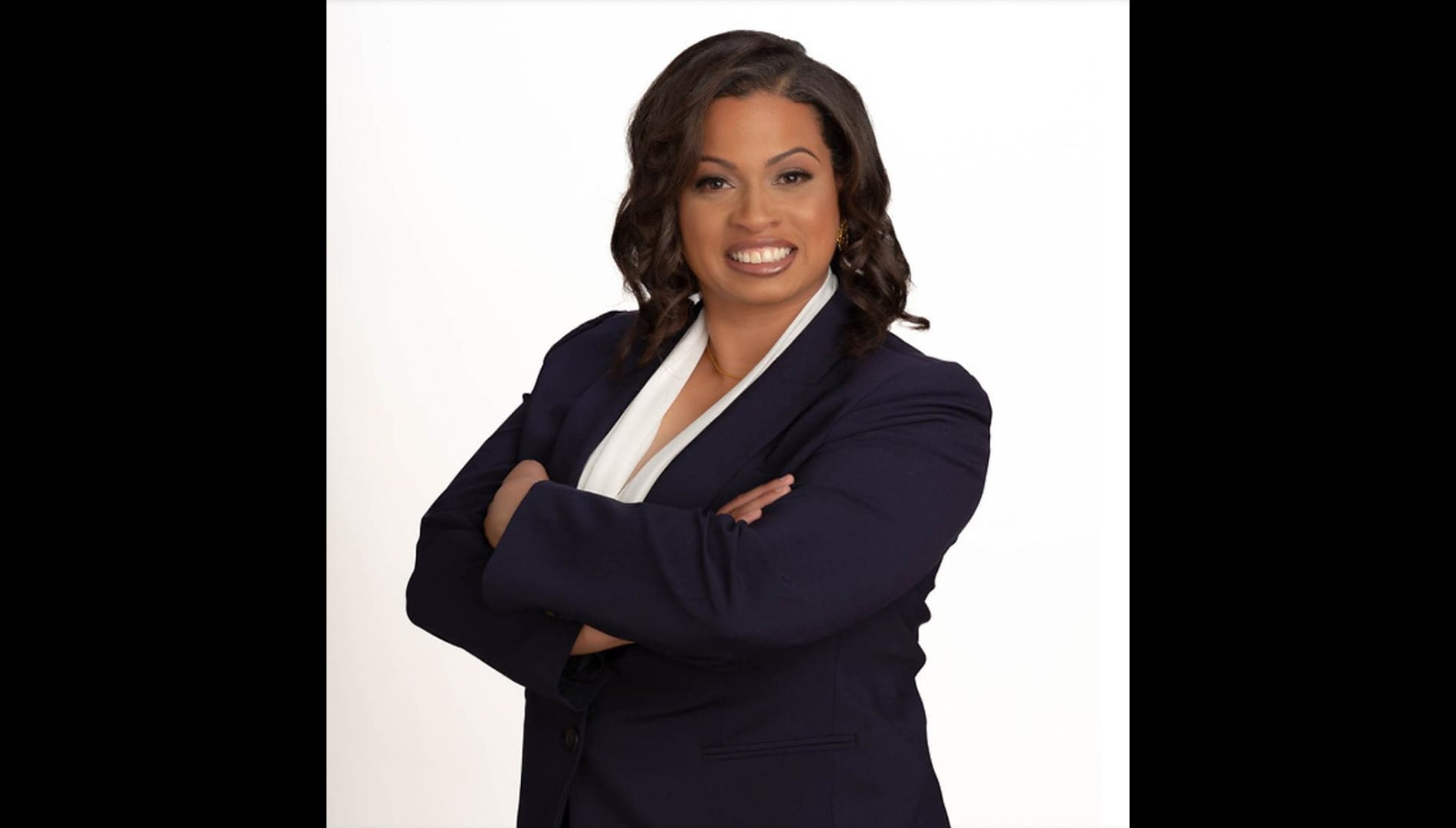
About the Candidate
Name: Carolynn Denise Crump
Date of Birth: Oct. 7, 1975
Occupation: Police Officer
Political Experience: I previously ran as a candidate for Illinois State Representative - 6th District in 2022.
Political Party: Democrat
Website: DrCarolynnCrump.org
Twitter | Facebook
Candidate Q&A
Why are you running?
With my education and professional experiences, I know what it takes to improve the quality of life in the 16th Ward. I can research and develop strategies with stakeholders to come up with a comprehensive plan that includes citizens’ ideas and suggestions.
Based on my experience, I can devise and elaborate an effective vision for improving economic development in the short and long-term in the 16th ward. I can work with stakeholders to implement a development plan for new and renovated properties. I can work with the community to open dine-in and take out restaurants and coffee shops, small retail businesses like clothing and furniture stores, and everyday essential businesses like grocery stores and pharmacies.
Lastly, I am a hands-on-deck person. I listen to everyone’s needs when someone is in need for help. I can research the issues(s) and look for solutions using available resources. In addition, I’ve assisted many people with a variety of issues by showing them “how to overcome” their fears or obstacles to succeed in life. Under my leadership, the 16th Ward will attract more citizens and businesses to move in and bring a higher quality of life to all residents.
What does this office do well, and what needs fixing?
For the last 4 years, the 16th Ward has suffered from a lack of leadership. The incumbent has failed to address issues of crime, economic disinvestment, and quality of life. My opponents offer piece-meal approaches to combatting crime, reversing years of disinvestment and investing in our children’s futures. I have outlined a holistic, comprehensive plan for renewal of the 16th ward that calls for common-sense police measures, practical support of economic development, partnering with the business community and maintaining our neighborhood schools and community centers. What is the most pressing issue facing your constituents and how do you plan on addressing it? The 16th Ward is in dire need for real estate developments for residential homes, apartments, condos; small and commercial businesses; and places for leisure and recreational activities like theatres and hotel establishments for people in all ages and abilities. There are many vacant lands, abandoned buildings, zombie homes, and junk yards left behind which depreciates the value of resources coming into the community and continues to make the area depressing.
What specific steps would you take to ensure your office is accessible and responsive to your constituents?
I will have an open-door policy for all constituents who need city services or simply want to offer their opinion and advice on ward issues.
My successes in life were made possible by many contributors, including my parents, teachers, union, and community leaders. As Alderperson, I will work with our youth to ensure that they benefit from the same kinds of opportunities offered to me in my youth.
I support creation of a 16th ward Youth Advisory Committee, which will help identify issues facing youth and offer policy solutions. Members of the Advisory Committee will be selected from all youth living in the ward who are dedicated to making government work for all youth. The Committee will provide advice and direction to the Alderperson on policies and solutions that:
1. Ensure that all young people acquire relevant skills in line with skills demanded in the labor market This includes policies and solutions to address systematic barriers, stereotypes and biases based on the gender, sexual orientation, race, class, ethnicity, religion, disability, and national origin in education and career choice.
2. Support young people in their transition into the labor market This includes policies and solutions for investing in, cost-effective employment and promoting access to entrepreneurship.
3. Promote the well-being of young people This includes policies and solutions for providing income support for young people with insufficient means, making housing more affordable for all young people and investing in and promoting timely and affordable mental health support for young people.
Do you believe in the tradition of aldermanic prerogative, which gives each City Council member the final say on issues in their ward?
Chicago needs a government that listens and responds to the people. More than the Mayor or any downtown bureaucrat, an alderperson knows the concerns of constituents within their wards. Alderpersons can build support for policies and initiatives in the ward because they have day-to-day contact with a wide variety of residents. A good alderperson knows his or her constituents, what they want and need, and how city policies and programs will affect families, neighborhoods, and businesses in the community.
The aldermanic prerogative should continue as long as each alderperson complies with all nondiscrimination laws and decrees from federal, state, and local governments.
Should the $1.9 billion budget for the Chicago Police Department increase, stay the same or decrease?
For more than 23 years, I have been a Chicago Police Officer. I have worked a beat, learned de-escalation techniques, and managed an advanced technology program that aids the Department in fulfilling its mission of serving and protecting the people of Chicago. All of this takes money to do and needs to be funded properly. The biggest part of the police department budget is personnel costs. These costs are going up due to inflation. The budget will need to be adjusted to reflect higher costs and to make sure the department is fully staffed, has the right tools to do the job right, and promotes continuous professional development.
Should the city raise the Real Estate Transfer Tax on properties sold for more than $1 million to fund programs to help unhoused Chicagoans?
I do not support imposition of a higher tax rate on properties valued at $1 million or more. According to one estimate (see https://www.civicfed.org/civic-federation/blog/chicago-referendum-campaign-launched-increase-real-estate-transfer-tax), the cost to a buyer of a $1 million property would rise by more than 250%.
Commercial properties would bear the brunt of paying the extra tax. Raising the cost of doing business does not make economic sense now because we need to enhance our post-pandemic recovery. For this reason, I do not support the so-called “mansion tax.”
Should the city open and operate mental health clinics to provide free care to Chicagoans?
Yes. A good public mental health program will help prevent, diagnose, treat, and rehabilitate people with mental disorders within the local population. To accomplish these goals, the city and state must implement and fully fund an integrated, community-based approach that includes the elimination of discrimination, stigma and exclusion for people with mental illnesses and provides them with opportunities to become fully functioning members of society. Also, the city should partner with non-profit agencies to help people with mental illnesses find jobs in administrative, communication, cultural, tourist reception, and other services.
As Alderperson, I will work diligently with government and non-profit organizations to develop job opportunities for people with mental illnesses.
How should Chicago build the 120,000 homes it needs for low- and moderate-income Chicagoans?
The 16th ward has many vacant properties and unimproved land parcels. I believe the city must provide tax incentives for property in the ward to be developed, instead of remaining vacant. Also, I believe the city and Cook County must step in to buy and redevelop vacant land as a last resort.
The current tax system treats vacant, unimproved property the same as developed residential property. Both are assessed at 10% of fair market value. I support increasing the tax rate on vacant, unimproved property from 10% to up to 15% of fair market value and use the revenue to fund vacant land purchases by the Cook County Land Bank Authority (CCLBA). CCLBA was created in 2014 as a quasi-governmental unit of Cook County government.
Since its inception, the Authority has acquired, sold, or rehabbed 3,332 foreclosed or vacant properties in Cook County. They have done so with grant funds and property donations. With an increase in funding through higher vacant land taxes, CCLBA will have more funds to acquire, hold, and transfer interest in real property in Chicago. Withmore funding, CCLBA can promote redevelopment and reuse of vacant, abandoned, foreclosed or tax-delinquent properties. As Alderperson, I will advocate for tax rate changes and restructuring of the governing board of CCLBA to represent the interests of undervalued communities in Chicago.
In addition, I support measures that make housing less expensive and reduce infrastructure costs, including: * Expanding Chicago’s ADU pilot program The program allows build additional units in coach houses, backyard houses and in-law apartments. * Allowing smaller lot sizes By creating “small lot zones”, the city can potentially increase the number of homes that can be built in any community. * Streamlining rezoning of vacant non-residential buildings Vacant buildings can become eyesores in the community and attract criminal activity.
Also, the city may need to take steps to maintain the property, such as removing trash. Therefore, I favor streamlining rezoning to permit to redevelop properties such as churches and schools in a quick and efficient manner. * Provide cost offsets for affordable or workforce housing: bonuses would allow for more housing to be built on a specific sight. The three most used density bonus criteria are the number of dwelling units per acre, the floor area ratio and the height of the building.
As Alderperson, I would allow for arrange of reasonable density bonuses to increase the number of dwelling units in a development. * Help income-qualified homebuyers with down payment assistance I support efforts to provide down payment assistance for family or multi-unit dwellings.
What do you see as potential solutions to address the number of shootings in Chicago?
As a Chicago police officer, I have seen the value of state-of-the-art-technology, smart patrolling strategies and effective interagency and intergovernmental cooperation in fighting crime. As Alderperson, I will fight for the following common-sense crime fighting and violence reduction measures by building effective coalitions with state, city, and county law enforcement leaders.
1. Mandate “smart gun” regulations Every year, an estimated 380,000 guns are stolen in the United States. Many of these guns end up in the hands of criminals. If the guns were locked, they could not be used to commit a crime. I will push for legislation requiring “smart gun” technologies, which require owners to activate their guns based on a fingerprint or palm print.
2. Require better tracking of firearms and cartridges With “microstamping,” a unique code is stamped on the cartridge case of a gun upon firing. Law enforcement officers can then trace the cartridge back to the original firearm quickly and efficiently based on the unique code. This can lead to quicker turnaround in solving crime and apprehending an offender. Microstamping is the law in California. Why not here? I will push for legislation requiring microstamping.
3. Establish comprehensive gun buyback events I will push for a comprehensive Chicago/Cook County gun buyback program. Under this program, both governments purchase privately-owned firearms to remove deadly weapons from circulation. Typically, the government presents a prepaid gift card to a private gun owner in exchange for a firearm. No questions are asked to encourage participation in the buyback.
4. Return officers to patrol Why should police officers spend so much of their time producing paperwork? On average, officers spend around three hours or more per shift producing an incident report. This takes much-needed time away from actual policing. CPD must adopt technological solutions such as smartphone scanning, certified e-signatures, and speech recognition system to free up time for patrol.
5. Assign more Sheriff’s Deputies to high-crime areas in Chicago. The Sheriff of Cook County is the chief law enforcement officer in Cook County. They are responsible for protecting and serving all suburban and Chicago residents. The Sheriff must be more responsive to the needs of Chicago. When crime increases in Chicago, CPD and the Sheriff’s Department must shift resources quickly. Roving tactical teams or citywide community safety teams with flexible work hours should be created and assigned to work in trouble spots, based on analysis of time and location crime data. To make this happen, I will fight to build effective partnerships between the Sheriff and CPD.
6. Increase motor vehicle information sharing and tracking I will push for better vehicle information sharing between Chicago residents, CPD and the Sheriff to track and find stolen vehicles. Most vehicles sold after 2015 have GPS systems, which can be harnessed to help law enforcement identify and track stolen vehicles in real time. Using data from GPS, law enforcement can track the location of a car, find the carjackers and recover the vehicle quickly.
7. Increase police presence on high-risk CTA transit lines For ridership to return to the CTA, the city must increase police presence on the CTA. As Alderperson, I will advocate for additional funding for roving tactical teams or citywide community safety teams with flexible work hours who can be assigned to work in high-risk hot spots, based on analysis of time and location crime data. Also, I support safety initiatives such as adding K-9 units and redesigning fare gates to stop gate crashers from entering train stations, as well as providing housing and shelter assistance for homeless people who find refugee train cars.
8. Create a Community Violence Prevention Corps. Violence prevention works when individuals from the community serve as interveners. The effort needs to be expanded in Chicago so that enough interveners have the knowledge, skills and ability to establish deep connections in communities and bring about more lasting change. This will require institutional support in the form of a permanent agency of government.
Along with Cook County government, the city should set up a joint agency known as the Community Violence Prevention Corps that concentrates on violence prevention. The Corp will train and employ individuals and youth from at-risk families to serve as community relations specialist in areas confronting violence. The individuals will be trained in techniques of conflict resolution, mediation, de-escalation, and related skills. They will be employed by participating public and private agencies until such time as violence is brought under control.
What should the City Council do to stop the drop in the city’s Black population?
We, the Black community, have faced disinvestment, negligence, institutionalized racism, and denial of opportunity over generations. We don’t let that keep us down, despite what the cynics and naysayers believe. We keep hope alive through organization, education, and out-and-out agitation. And we will never give up our dream of making Chicago safe, secure, and prosperous for all residents.
Every four years, the Black community and allies throw their collective hats in the ring of City Council politics to elect alderpersons. During their four years in office, some alderpersons succeed in bringing about change while others fail to live up to the promise and need to be voted out of office. That time is now. We must change leadership in the 16th ward.
I hope to become a member of the next City Council. As Alderperson, I will work across all racial, class, and geographic boundaries to Implement the common sense measures I have outlined above to fight crime, foster economic development, and build a better tomorrow. Along with the business community, faith leaders, and community activists who believe in change, we will make the 16th ward a beacon of hope and opportunity for all.