

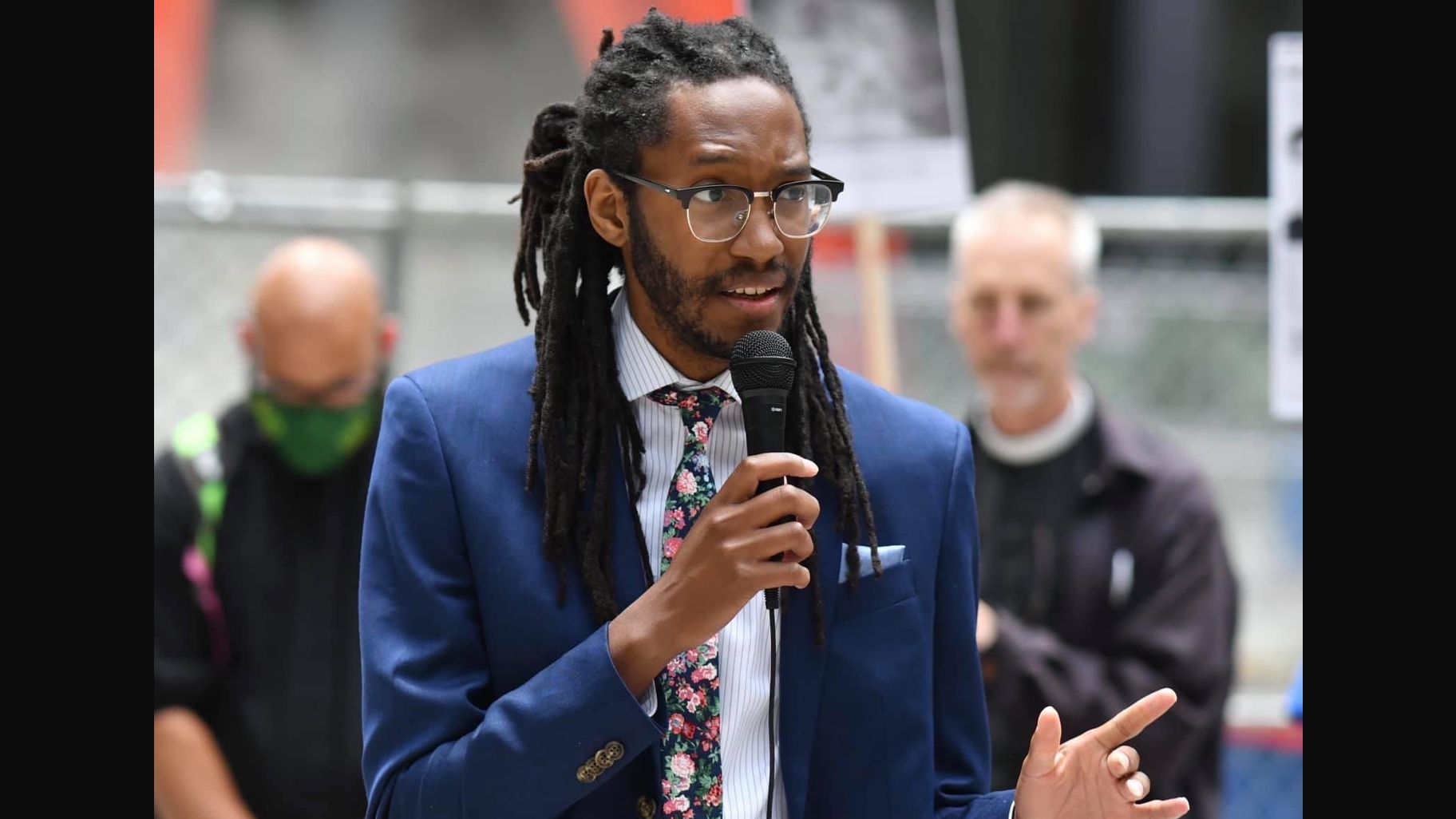
About the Candidate
Name: Warren Williams
Date of Birth: 1989
Occupation: Communications Director for The People’s Lobby
Political Experience: Volunteered on the Bernie Sanders presidential campaigns in both 2016 and 2020. Volunteered on campaigns for several local elections and leaders. Organized as a leader and on staff with The People's Lobby and People’s Action, around issues including the Fair Tax, the Pre-Trial Fairness Act, the Climate and Equitable Jobs Act, and the Rideshare Living Wage and Safety Ordinance. Founded the independent political organization, 30th United, where we: hosted regular community cleanups, phone banked to ensure the most vulnerable communities have access to COVID-19 vaccinations, supported community leaders in local elections, canvassed regularly to directly hear and learn from neighbors, worked on campaigns regarding affordable housing and zoning changes, organized around new development at the Belmont Triangle.
Political Party: Democrat
Website: Warrenfor30.com
Twitter | Facebook | Instagram
Candidate Q&A
Why are you running?
I am running for Alderperson of the 30th Ward to bring a people-first vision, transparency, accountability, and the community’s voice to the ward office and City Council. Our neighborhoods deserve leadership that is rooted in and accountable only to the community, not entrenched in political machines or family dynasties. I’m running as a community organizer, with the same mission I had in founding the IPO, 30th United: to build a government and a Chicago that fights, advocates, and provides for the people.
Together, the Warren for 30th campaign is building a rainbow coalition of Latino, Black, White, and Asian working class folks across the ward so that every one of our neighbors will be heard. We have a collective vision to address poverty, public safety, and climate action through legislation and a city budget that work for working families and people.
What does this office do well, and what needs fixing?
I look forward to building a ward office that provides equitable constituent services, transparency and democracy in zoning decisions, and accountability throughout all neighborhoods of the 30th ward.
What is the most pressing issue facing your constituents and how do you plan on addressing it?
The 30th ward is facing significant issues of economic inequity and affordability. These concerns are tied together with ensuring that basic needs are met for all Chicagoans, and include addressing issues of poverty, public safety, transportation, and climate.
I see neighbors getting priced out of our neighborhoods as renters and homeowners being unable to afford rising property taxes. We need to build more affordable, accessible housing.
We must also look ahead at what a Green New Deal for Chicago looks like, and how we can create publicly funded jobs and economic opportunities to update infrastructure and decarbonize our city. This must also include the expansion of our public transportation. We must ensure our CTA is accessible, expanded, and reliable. I also believe in universal public transit, making our CTA free to ride.
Investment is also essential to prioritize our youth in education, after-school programs, and mental healthcare.
I will work in coalition with community groups and electeds I’ve built relationships with through community organizing so together, we can secure funding to meet these basic needs. I will work to propose other progressive sources of revenue like the La Salle Street tax, real estate transfer tax, and taxes on luxury residential rental properties. Chicago has to explore raising revenue without taxing working class people to ensure that the wealthy pay their fair share and that our social services and the above initiatives are fully funded.
What specific steps would you take to ensure your office is accessible and responsive to your constituents?
I will be intentional in engaging the community on zoning decisions, and my future ward office will have multilingual communication in English, Spanish, and Polish, and hold both in-person and virtual meetings as much as possible to inform, update, and involve all constituents. We will work to ensure transparency and democracy in regards to development and zoning decisions as these decisions affect the livelihoods of everyone in the ward. I also want to introduce participatory budgeting, where residents 16 and up will be able to collaborate and vote on how we spend our menu money each year.
Do you believe in the tradition of aldermanic prerogative, which gives each City Council member the final say on issues in their ward?
I am generally opposed to the alderperson having total control of zoning in their wards, and support community driven zoning and development processes, but also note the more nuanced consideration when it has worked in favor of construction of affordable housing projects.
Should the $1.9 billion budget for the Chicago Police Department increase, stay the same or decrease?
I believe the city budget needs to consider more responsible spending, allocating our tax dollars to address the root causes of crime by fully funding social services, education, and youth programming. Our communities are safest when they have access to the services and support that are needed to live full lives.
Should the city raise the Real Estate Transfer Tax on properties sold for more than $1 million to fund programs to help unhoused Chicagoans?
Yes, I support the Bring Chicago Home campaign to ensure all Chicagoans have shelter and a home.
Should the city open and operate mental health clinics to provide free care to Chicagoans?
Yes. Working people and families deserve accessible and affordable mental health services in every neighborhood.
How should Chicago build the 120,000 homes it needs for low- and moderate-income Chicagoans?
In the 30th ward, I've previously mobilized with Palenque LSNA and 30th United around community demands that the Belmont Triangle development include affordable housing. The city needs to expand and improve public and affordable housing by building more, responsible density. The Chicago Housing Authority has a history of mismanaged finances while families sit on waiting lists, so there also has to be some significant reform and accountability to get Chicagoans housed. Further, I also support the Bring Chicago Home campaign, offering a real estate transfer tax as a revenue solution to permanent affordable housing.
What do you see as potential solutions to address the number of shootings in Chicago?
Chicago has to get serious about preventing crime and addressing its root causes, and that means investing in communities through youth programming and employment. I believe in preventative public safety measures and will fight for increased access to mental health services and funding for programs for Chicago’s youth and our public school systems. In regards to employment opportunities, the Clean Energy Jobs Act has been an exciting start for Illinois, and we need significant movement on the city level as well that includes energy transition, moving from the gas-centric, to more electric, weatherization of buildings, retrofitting older buildings, and replacing lead pipes throughout the city. All this work would make for good, public, union jobs.
How can the city better serve Spanish-speaking residents?
Beyond ensuring ward-specific and citywide communications are all translated and accessible, one way the city can support Spanish-speaking residents is by fully funding CPS so there are resources for ESL students, bilingual teachers, and parents in all schools. Beyond ensuring ward-specific and citywide communications are all translated and accessible, one way the city can support Spanish-speaking residents is by fully funding CPS so there are resources for ESL students, bilingual teachers, and parents in all schools.
Should the city do more to help undocumented immigrants?
Yes. In order to be a truly welcoming sanctuary city, Chicago needs fully funded social services and more affordable housing to support both migrants and those native to Chicago.