

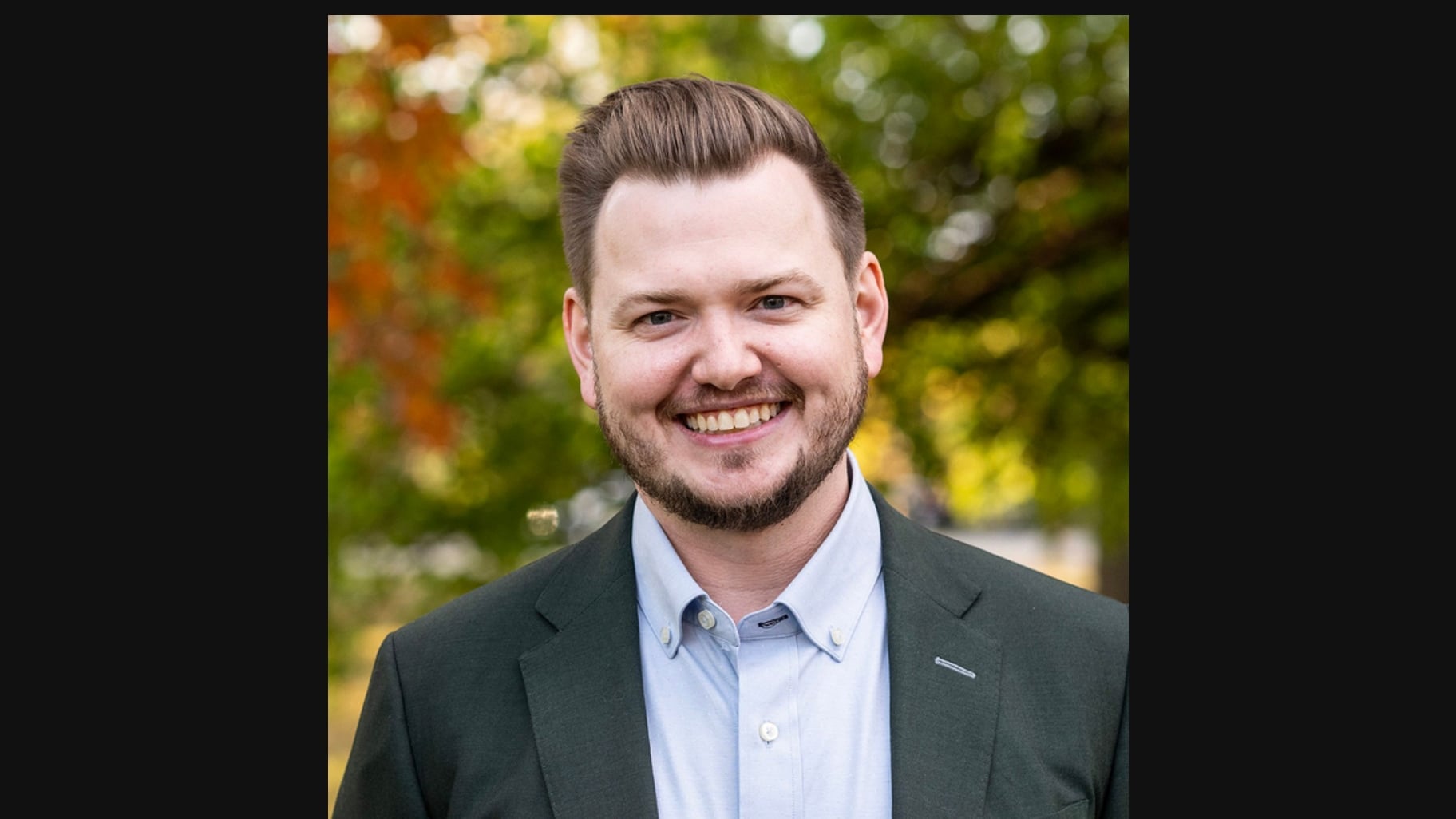
About the Candidate
Name: Sam Royko
Date of Birth: July 23, 1987
Occupation: Attorney
Political Experience: My work as a community advocate began after my family experienced a carjacking in Wicker Park - an experience that has become far too common for 1st Ward residents. Over the past years, I have focused on building a coalition of stakeholders, including 10 neighborhood organizations, to demand the change our city needs, particularly relating to public safety and a fair and transparent redistricting process.
Political Party: Democrat
Website: www.roykoforchicago.com
Candidate Q&A
Why are you running?
I believe that 1st Ward residents deserve a more effective leader, a better advocate, and a representative who can bring the community together. I believe Chicago’s best days are ahead of us.
A love for this city is part of my heritage. My father, Mike Royko, served as a voice for Chicagoans through his newspaper column for over 30 years. His legacy motivates me to serve this city and be a representative for my neighbors. I have built my career as an attorney, litigator, mediator, and most importantly, an advocate.
I was spurred into action when my girlfriend Erin experienced a carjacking in Wicker Park - an experience that has become all too common for 1st Ward residents. After that trauma and a disappointing response from the Alderman’s office, we channeled our frustration into making a difference for our community.
As Alderman, I will fight for safer neighborhoods, to address the root causes of crime, and advocate for better public transit. But what truly makes me the right person for these times is that I understand residents in the new 1st Ward need an Alderman that everyone can work with. I will be a resource to residents, small business owners, and anyone willing to help our communities recover economically and thrive. What does this office do well, and what needs fixing?
Our current Alderman has not done enough on the issues and services that are most important to his constituents. Every local Alderman should be connected to the community, and considered trustworthy, reliable, and deliver consistent services and communications. Unfortunately, the incumbent has fallen short. When we went to the current Alderman’s office after the carjacking he just threw his hands up and offered no empathy for our trauma, or for solutions to help others avoid the same experience.
I have heard from far too many 1st Ward residents that they have had similar experiences with his office. The 1st Ward deserves better. We deserve a leader who is focused on delivering strong city services and bringing people together to tackle the challenges we face.
What is the most pressing issue facing your constituents and how do you plan on addressing it?
We must focus on creating safer neighborhoods, advocating for more affordable housing options, and revitalizing local business corridors. I will advocate for more community police officers and support funding for violence prevention programs to address the root causes of crime, like mental health and lack of opportunity. In order to protect the character of our neighborhoods, while also increasing housing supply, I am committed to a fully open and transparent community review process for zoning and development proposals.
To help encourage economic growth, I will cut red tape and create an office that helps local businesses succeed in the 1st Ward. Across the board, I will be someone who comes to the table ready to get things done and deliver results for my community, regardless of any ideological or political divide. I will be a representative for all 1st Ward residents.
What specific steps would you take to ensure your office is accessible and responsive to your constituents?
My office will always be a place where residents can bring requests and ideas, and we will respond and deliver results. Further, I hear from community stakeholders, and while knocking doors, that there is a need for the Alderman to be more present in the community. To that end, I will also regularly host public meetings and opportunities to gather feedback and ideas from residents and community stakeholders.
Do you believe in the tradition of aldermanic prerogative, which gives each City Council member the final say on issues in their ward?
Yes, any local Alderman who takes stock in how the community feels about an issue, such as upzoning or infrastructure, should know how to have the community's best interest in mind. Having your finger on the pulse of the community is part of the job.
Should the $1.9 billion budget for the Chicago Police Department increase, stay the same or decrease?
As Alderman, I will advocate for a holistic approach to public safety that addresses both the immediate need for residents to feel safe with additional city funding for officers and public safety resources while also making investments that address the root-causes of crime. Residents are feeling the impact of an understaffed police department. We need more officers assigned to our police districts which means making the hiring, training, and retention of officers a priority. Helping officers return to the Chicago Police Department would allow us to have more jobs filled, and a more educated and well-trained staff in the districts.
I will expand smart technology like investigative cameras and license plate readers through my 1st Ward Aldermanic menu. These help to maintain active pursuits safely while also providing much-needed evidence for solving and prosecuting crimes. Over the past three years, Downtown and Near Northside Aldermen have allocated ward money to help the police with over 100 new cameras. The current 1st Ward Alderman has only installed two.
I will support more funding for effective, data-driven violence prevention programs like READI, CRED, and Choose to Change which provide mental health and wrap-around services to individuals who are at risk of engaging in crime.
Additionally, I will support targeted investment in communities that have historically been underserved to address the need for better housing, job training, and mentorship programs.
Should the city raise the Real Estate Transfer Tax on properties sold for more than $1 million to fund programs to help unhoused Chicagoans?
I am committed to helping unhoused Chicagoans and want to explore all options to achieve that goal, but I am not in favor of property tax increases, and I don’t believe that increasing the real estate transfer tax at this time is a prudent financial decision.
Should the city open and operate mental health clinics to provide free care to Chicagoans?
Yes. Closing mental health clinics has had lasting impacts. New clinics are needed, and funding for mental health needs to be increased. Additionally, we should work with organizations and local stakeholders that are already making strides to improve mental health care and learn how we can best assist and scale-up their efforts.
How should Chicago build the 120,000 homes it needs for low- and moderate-income Chicagoans?
We need to stay creative in developing more affordable housing and ensure that all new affordable housing units are comparable to any market rate units. For example, I see possibilities for private investment on modular/manufactured housing communities. When done in partnership with the City of Chicago, large areas of land can be identified and developed.
These developments would be cost effective for the City, and with the involvement of property management could provide housing for a family in need with a cost far lower than in a standard building. The last one of these communities to be created was in the 1960s in the easternmost Hegewisch neighborhood. City Council can adapt more of this approach and help create long-term options for affordable family housing.
What do you see as potential solutions to address the number of shootings in Chicago?
As Alderman, I will advocate for more city resources to address public safety, including additional officers, smart policing technology, mental health professionals, and resources for violence intervention. I will also work with other elected officials to support common sense gun safety laws. I will support targeted investment in communities that have historically been underserved to address the need for better housing, job training, and mentorship programs. As part of these efforts, I will focus on what we can do to help our young people get the support and opportunities they need.