

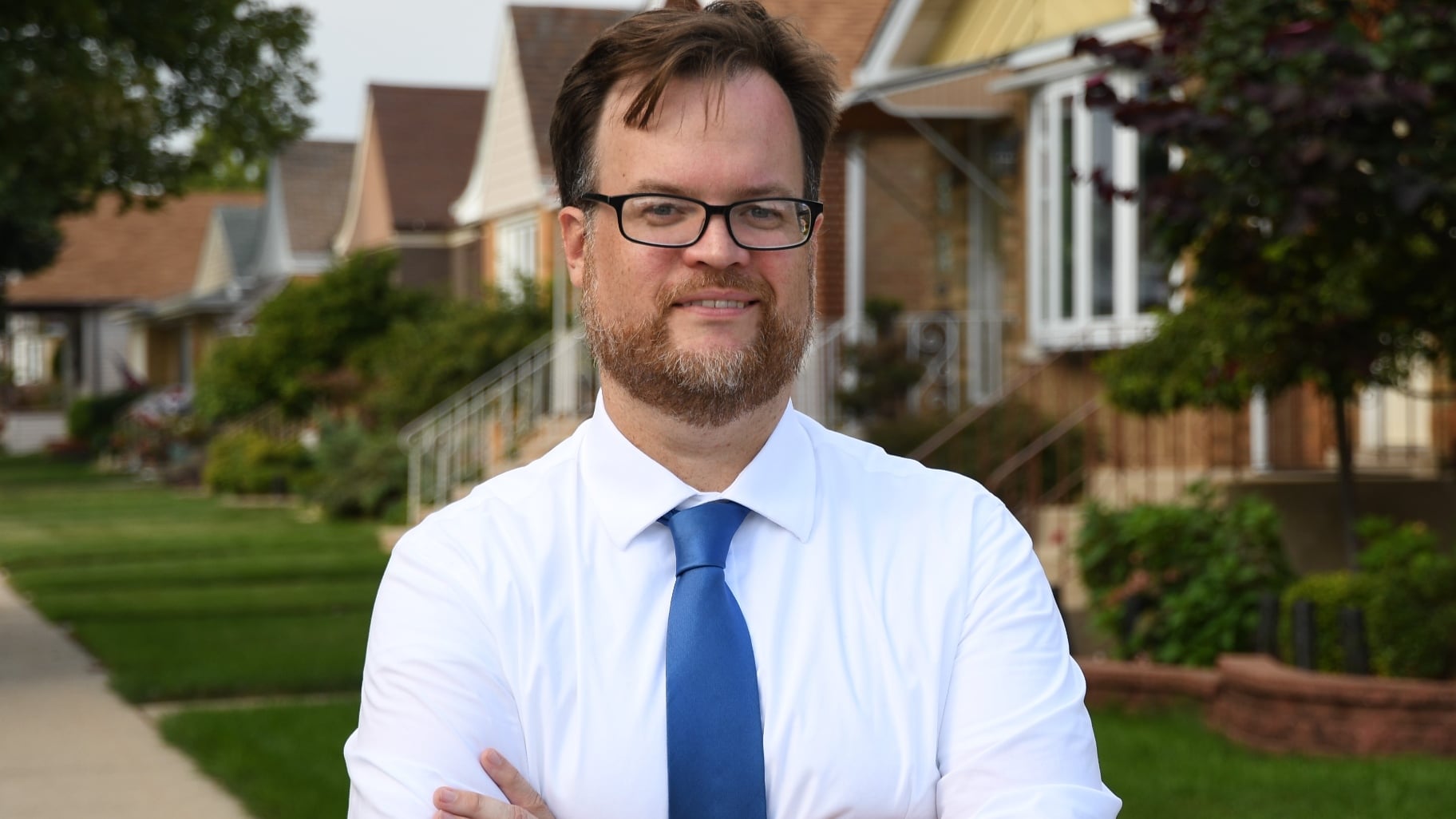
About the Candidate
Name: Paul Bruton
Date of Birth: April 17, 1986
Occupation: Parent
Political Experience: N/A
Political Party: Democrat
Website: BrutonforChicago.com
Twitter
Candidate Q&A
Why are you running?
We have a public corruption problem here in the 13th Ward, and I want to fix it. The 13th Ward Democratic organization is implicated in the ongoing Madigan/ComEd scandal, and I've spoken with many voters who have experienced the harassment and intimidation tactics of this organization firsthand. We deserve honest government that respects and serves all of us, no matter who we vote for or support. My background is in government oversight, so I know how city government works and how it can work better. As alderman, I will engage with the community, treat all our neighbors with dignity, and work to make the 13th Ward the best it can be.
What does this office do well, and what needs fixing?
Many voters have told me that the current alderman is generally responsive to requests for city services. However, I believe this is a bare minimum expectation for the job and that voters in the 13th Ward should expect more from their government. The current alderman has been mostly absent in the policy discussions around the big challenges facing Chicago. As alderman, I will continue to address constituents' day-to-day needs while also actively working to solve the larger issues that affect our community and our city.
What is the most pressing issue facing your constituents and how do you plan on addressing it?
I've talked with voters throughout the ward, and their number one concern is reducing crime and improving public safety throughout Chicago. As alderman, I will advocate for a citywide expansion of the city's mental health responder program to improve how we handle 911 calls for mental health while freeing up police to focus on preventing and responding to violent crime. I will also work with the Police Department so that they have the resources necessary to staff every beat on every shift without working our officers to the point of exhaustion, and I will work to ensure that officers have the training and mental health support that they need to do their jobs safety. As a long-term solution, I will also support making long overdue investments in disinvested communities to tackle the conditions that can lead to crime in the first place.
What specific steps would you take to ensure your office is accessible and responsive to your constituents?
I plan to make myself and my staff available to the community through regular town hall meetings to discuss neighborhood issues. I also plan to keep our ward office open late one evening a week so that working people can easily access services and make requests, and I want to build a 13th Ward website so residents can access information about city services 24/7. My goal is to make contacting our office and accessing city services as convenient as possible for everyone in our community.
Do you believe in the tradition of aldermanic prerogative, which gives each City Council member the final say on issues in their ward?
No. While alderman should certainly play a role in the development of their wards, the current system of aldermanic prerogative has historically served as an opportunity for corruption. Aldermen should not be involved in the routine review of permits, licenses, and zoning changes. These sorts of routine operations should be governed by rules that apply to everyone and not by the whims of any given alderman. While I support giving aldermen and residents some ability to object to unusual or especially controversial proposals, eliminating the current system of aldermanic prerogative will help speed up development and reduce public corruption.
Should the $1.9 billion budget for the Chicago Police Department increase, stay the same or decrease?
The current CPD budget should stay at the current $1.9 billion allocation. If we cannot recruit new officers to fill the department's current vacancies, we should consider reallocating funds within the existing budget to either offer recruiting incentives to attract new officers or to fund more civilian administrative staff to free up officers to focus on preventing and responding to violent crime.
Should the city raise the Real Estate Transfer Tax on properties sold for more than $1 million to fund programs to help unhoused Chicagoans?
Yes. We need to do more to help unhoused Chicagoans, and increasing the real estate transfer tax is one way to fund this priority. I'm open to other solutions, but this is the proposal that's on the table, and I think it's a reasonable solution to a very urgent issue.
Should the city open and operate mental health clinics to provide free care to Chicagoans?
Yes. We need to do more for mental health across the board, and reopening and operating CDPH mental health clinics so all Chicagoans have access to quality mental healthcare is a necessary first step.
How should Chicago build the 120,000 homes it needs for low- and moderate-income Chicagoans?
I support the continued application and enforcement of the Affordable Requirements Ordinance (ARO) to ensure that affordable housing continues to be built throughout Chicago, and I support an expansion of the Accessory Dwelling Unit (ADU) Ordinance to allow for property owners to build additional units outside the current pilot areas. Both of these ordinances will bring us closer to meeting the need for affordable housing in our city.
What do you see as potential solutions to address the number of shootings in Chicago?
Addressing shootings in Chicago will require a multi-faceted response that includes aspects of policing, mental health, community investment, and education. In the near term, we need to ensure that our police have the resources to prevent and respond to incidents, minimize harm, and keep Chicagoans safe. Beyond that, we need to make sure that we're investing in education, infrastructure, and opportunity throughout Chicago to eliminate the desperate conditions that are so often at the root of gun violence, and we need to fund violence intervention programs that can interrupt cycles of violence and stop shootings before they happen.
Should city employees continue to be required to live in Chicago?
Yes. I believe that city employees who serve Chicago should live within city limits and continue to contribute to the vitality our communities.