

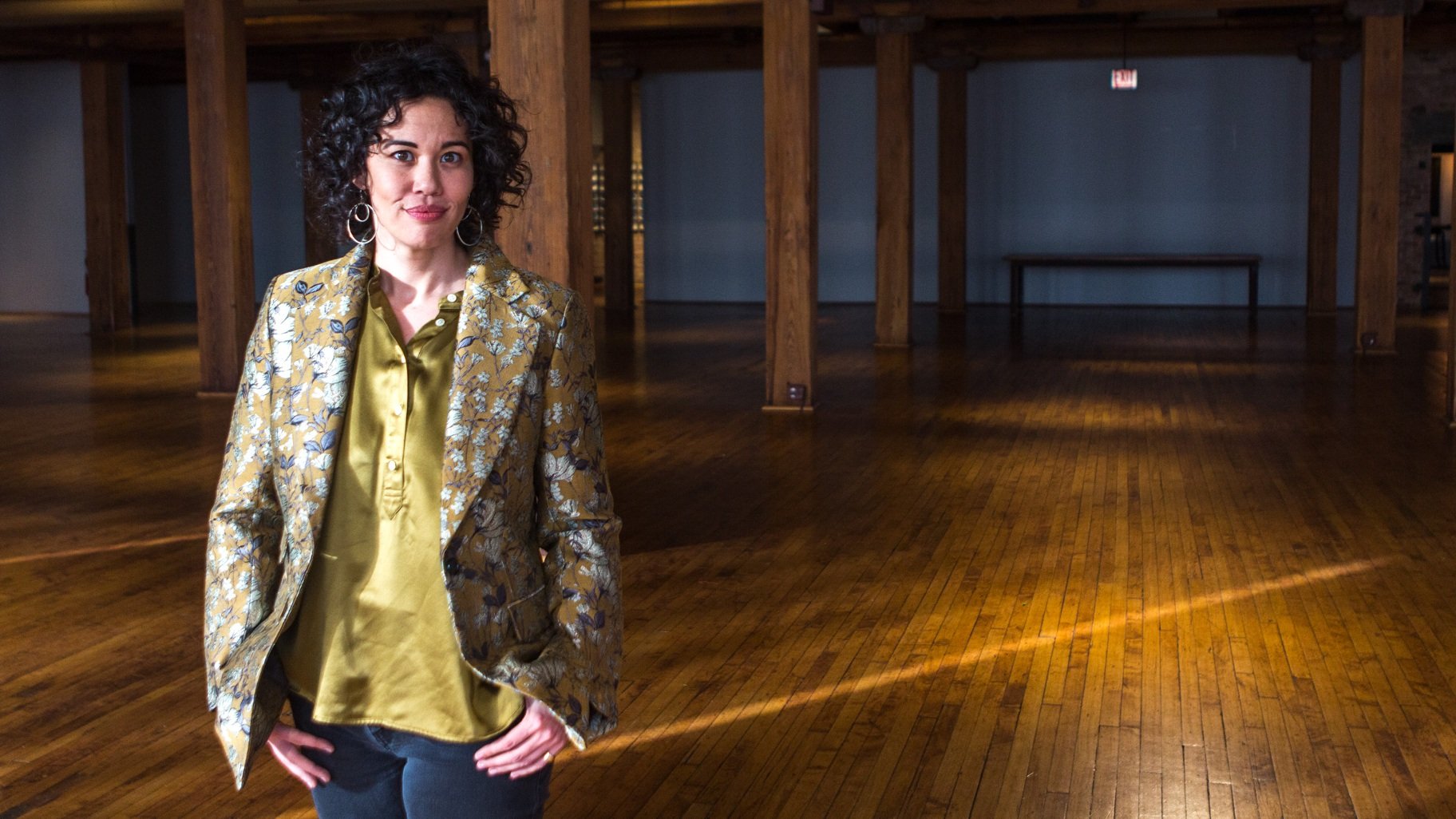
About the Candidate
Name: Jocelyn Hare
Date of Birth: 1980
Occupation: Senior Assistant Director, Harris Policy Labs at the University of Chicago
Political Experience: Ran for 5th Ward Alder in 2015
Political Party: Democrat
Website: hareforfive.com
Candidate Q&A
Why are you running?
The Fifth Ward is facing a tidal wave of development that threatens to price out our residents and small businesses–the fabric of our communities. Three years into the pandemic, neighbors across the Fifth face rising costs of living that outpace what we’re earning, while also struggle to get basic needs met. The next Alder of the Fifth Ward must be able to shape transformational change in a way that puts community first; addresses our rising housing costs; and heals our collective trauma. I am committed to putting community first. Always.
My name is Jocelyn Chou Hare and I’m not a politician. I’m a problem solver.
I am a problem solver who gets things done by bringing together community and subject matter experts (SME) to work on the most pressing issues facing our City. Affordable Housing. Equitable Development. Safety, and its intertwined issue of Mental Health. I’ve spent my career working with talented problem-solvers at Chicago Public Schools, the University of Illinois at Chicago, the University of Chicago, in Gary, Indiana, and most recently, right here in the Fifth Ward with the South Side Housing Data Initiative. I know that making good decisions means centering and amplifying residents’ voices. I believe we can achieve the world we want to see by working together.
What does this office do well, and what needs fixing?
Ald Hairston has built up a career's worth of connections and knowledge and that has served some parts of the Ward well at certain times. However, elected official responsiveness needs fixing, in addition to:
Safety: Residents of the Fifth Ward must have safe, accessible, and walkable streets, 24/7
Housing: The Fifth Ward lacks enough safe, healthy, accessible, and affordable housing to meet the specific needs of our existing residents. Equitable Development: The Fifth Ward is becoming unaffordable for residents and small businesses.
What is the most pressing issue facing your constituents and how do you plan on addressing it?
I'm committed to leading the fight for affordable homes for every 5th Ward family—because having a safe, secure place to live is the foundation of success and prosperity. Immediately, I would: Centralize housing resources for renters and homeowners into a Ward-based “one-stop shop;” Call for a Host Community Emergency Fund help residents maintain their homes in the face of massive development;
Short- to Mid-term Goals: Implement a Community Census to identify precise needs of residents; Landbank City and County-owned properties for Community-identified use; Connect residents to resources for: Legal Services, Tenants Rights, Homeownership; Alternative Housing Models, and Home Repair.
Long-term Goals: Create a regional plan for housing and equitable development with the community areas in and surrounding the 5th Ward; Stabilize health of condo and coop homeowner associations; Collaborate with other lakefront communities and the Army Corps of Engineers on shoreline erosion and flooding.
What specific steps would you take to ensure your office is accessible and responsive to your constituents?
We are committed to creating a community where all are welcome, regardless of the color of our skin or the size of our bank account. We will implement a Ward Precinct Council with voting power that runs a transparent, participatory budgeting process, and also have an open-door policy.
Do you believe in the tradition of aldermanic prerogative, which gives each City Council member the final say on issues in their ward?
No. The tradition of aldermanic prerogative is opaque and is not accountable to taxpayers. In worst cases, it enables corruption and nepotism, as alderpeople have used their power for personal gain rather than for the benefit of the community as a whole.
Should the $1.9 billion budget for the Chicago Police Department increase, stay the same or decrease?
At the present time, there is no police strategy, so it is impossible to say whether the budget should be changed.
Should the city raise the Real Estate Transfer Tax on properties sold for more than $1 million to fund programs to help unhoused Chicagoans?
Post-pandemic, the Chicago real estate market remains fragile. Given this unprecedented disruption, additional tax burden must be postponed.
Should the city open and operate mental health clinics to provide free care to Chicagoans?
Yes. Benefits significantly outweigh costs.
How should Chicago build the 120,000 homes it needs for low- and moderate-income Chicagoans?
Begin with filling the over 10,000 vacant housing units on the South Side in the neighborhoods surrounding the Obama Presidential Center; Expand ADUs Citywide; Invest in high-density TOD housing units; Build housing units on the massive acres of vacant lots leftover from Plan for Transformation.
What do you see as potential solutions to address the number of shootings in Chicago?
Immediately: Install speed bumps to slow traffic; Ensure streetlights are working and transportation routes well-lit; Clear, transparent dialog and plan for safety involving residents, UCPD, CPD, and the newly-elected police district officials. Short- to Mid-term: Activate vacant buildings and lots; Resource trained civilian response to 988 calls; Implement a safety plan that reflects the needs of the communities we serve. Long-term: Trauma-informed policies that meet the needs of our residents; Infrastructure designed to meet the needs of youth, women, seniors, and people with disabilities; Shrink the black markets driving crime.
Should Promontory Point be designated as a city landmark?
Yes.
Should city officials put protections in place to prevent gentrification spurred by the Obama Presidential Center in South Shore?
Yes. See historicsouthsidecommunitysurvey.com
Should city officials do more to protect trees in Jackson Park from being uprooted?
Yes.
What steps should the city take to prevent Chicago’s shoreline from eroding further?
Collaboration between lakefront communities and the Army Corps of Engineers on shoreline erosion and flooding issues is essential. This is a massive issue that will take huge amounts of money, coordination, and collaboration to solve.