

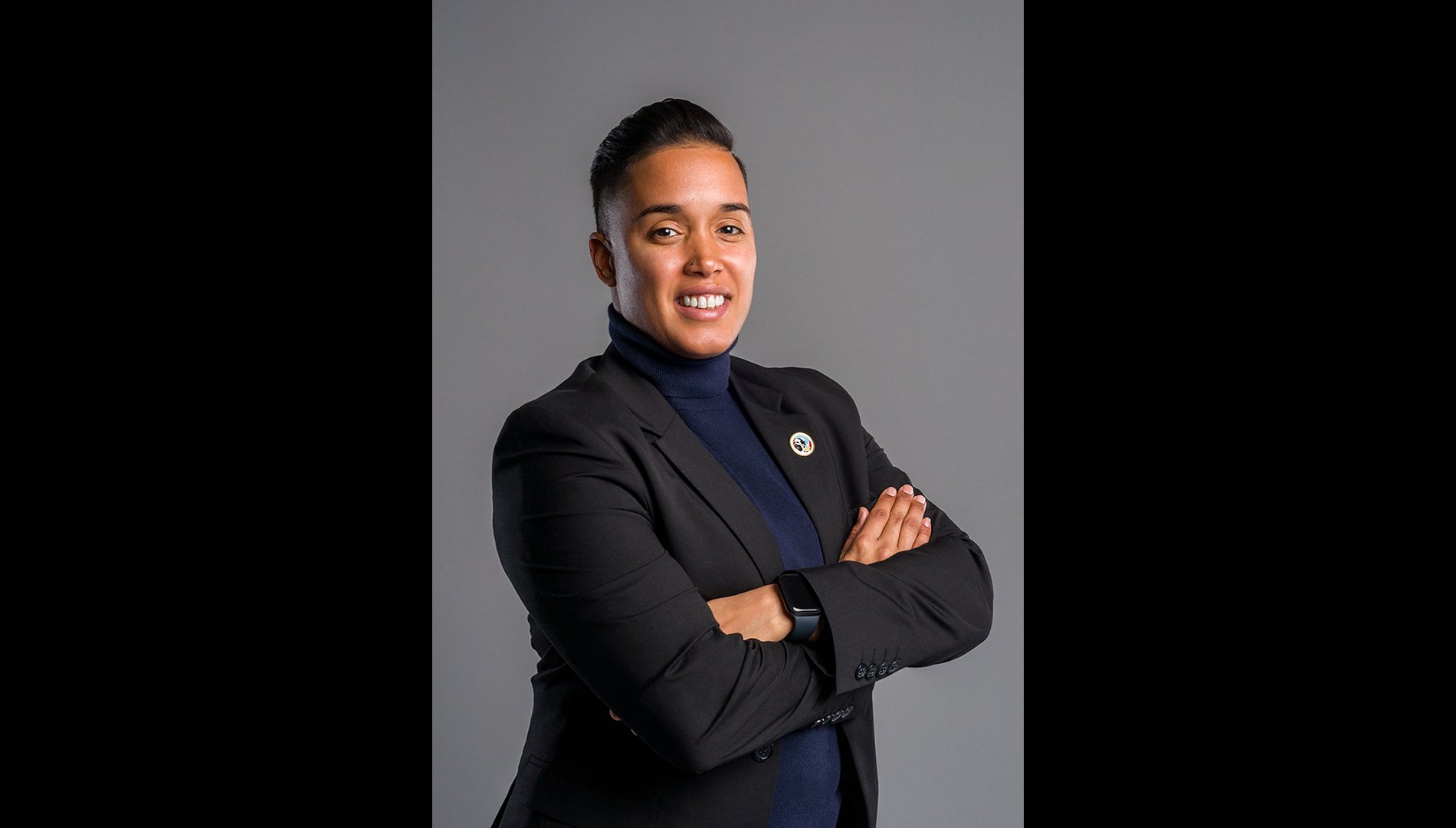
About the Candidate
Name: Jessica "Jessie" Fuentes
Date of Birth: Feb. 7, 1991
Occupation: Director of Policy and Youth Advocacy at the Puerto Rican Cultural Center
Political Experience: First-time Candidate
Political Party: Democrat
Website: Jessiefor26thWard.com
Twitter | Facebook | Instagram
Candidate Q&A
Why are you running?
I am running because I believe it is time that we develop a new political paradigm, one where ethics and co-governance is the norm. My candidacy will exhibit my talents, lived experience, professional and political experience, and bring this vision for a new kind of politics to the forefront. The 26th ward deserves a true political movement that carries neighbors and carries blocks through a process of participatory democracy. The 26th ward deserves an office that is rooted in community voice and transparency. Our office will address public safety, housing, education, health, and economic development through a participatory process. I am running because it is time the 26th Ward has leadership grounded in our community’s needs, not self-enrichment and corporate interests.
My community in the 26th Ward saved me, and gentrification, rising rents, and structural injustice are eroding that opportunity for others. I want to stop the displacement of our community. I want to take on developers and corporate interests on behalf of the community. I want to find alternative and progressive revenue streams to support city government that make the wealthy pay their fair share. I want to bring back city mental health services and increase funding for homeless prevention, substance abuse and joblessness.
I want to send a message to young people that transformation and healing is possible. It is by electing someone like myself, who has experienced the hardships of poverty and generational trauma, that we can show 26th Ward residents and Chicagoans at-large that there is a world of possibilities for us all. I believe that whether you are a perpetrator or a victim violence, we can find healing and a path forward. We can take on systems of oppression that perpetuate cycles of poverty and violence, and we can win.
As Alderperson of the 26th Ward, I will disrupt politics as usual. My commitment is to move away from the transactional politics of today towards a transformational politics grounded in our communities’ talents and ideas. My office will ensure that there is community input on budget, zoning, and community-lead solutions on housing, economic development, public safety, quality education, and infrastructure. We will transform the outdated forms of governance and make our office into an organizing space where we work towards community sustainability, building healthy ecosystems and combating systems of oppression.
What does this office do well, and what needs fixing?
This office by the current Alderperson has brought in affordable housing and has worked towards fighting gentrification and sustaining working families. This office if elected will focus on providing quality constituent services, resources to address public safety concerns, bring in resources for small business owners, invest in our public schools and continue to fight gentrification.
What is the most pressing issue facing your constituents and how do you plan on addressing it?
The top issues facing residents of the 26th Ward face are redlining practices through gentrification, violence, and lack of investment in infrastructure. As Alderperson of the 26th Ward, I intend to continue to fight for more affordable housing in the ward, and to create a process of participatory democracy that allows the residents of the 26th Ward to be a part of the solutioning around issues of public safety, education, and economic development. As a restorative justice practitioner, I believe in the power of relationship building, putting healing and trauma-informed strategies at the forefront.
As a 26th Ward Alderperson, I will advocate for city dollars to be allocated to our ward to support the expansion of mental health services, street outreach, quality after school programming that are culturally competent, and to create restorative justice councils that work to reduce the incarceration rate in our community. I grew up in a family that was gang-involved. I have lost family members to gun violence, and watched several of my students lose their lives to gun violence in my time as an educator. One of my priority areas as an Alderperson will be to address the violence in our ward with a restorative and healing-centered lens. I will be a champion in the city council for Treatment not Trauma and center community voices in strategy building for public safety.
What specific steps would you take to ensure your office is accessible and responsive to your constituents?
We are committed to hiring a staffer that is focused solely on constituent services. My office will have bi-weekly ward nights that are held on a weeknight and on the weekend to accommodate all families across the ward.
Do you believe in the tradition of aldermanic prerogative, which gives each City Council member the final say on issues in their ward?
I do not. We must end the tradition of Aldermanic prerogative. It has historically been used as a tool to continue segregation. We must provide more affordable housing city wide and make concerted efforts to desegregate our city.
Should the $1.9 billion budget for the Chicago Police Department increase, stay the same or decrease?
I do believe in the reallocation of CPD funds to ensure that we are bringing more mental health clinics in our communities, investing in street interventionists, case managers, victim specialists, and therapists to resolve for the root causes of violence in our communities.
Should the city raise the Real Estate Transfer Tax on properties sold for more than $1 million to fund programs to help unhoused Chicagoans?
Absolutely, I support the Bring Home Chicago Ordinance and the Real Estate Transfer Tax on properties can help resolve for the increased in unhoused Chicagoans across the city. The transfer tax for purchasers of high-end properties valued at over $1 million would rise substantially from $3.75 per $500 of a property’s total sale price to $13.25 per $500 in value. The cost to a buyer of a $1 million property would rise from to $7,500 to $26,500. Revenues from the increase in the transfer tax would be earmarked for homeless programs. Bring Chicago Home estimates that the transfer tax increase could generate as much as $163 million annually to provide permanent affordable housing and related services for the homeless.
Should the city open and operate mental health clinics to provide free care to Chicagoans?
Absolutely. Mental health care should not be a privilege but a right. In order to resolve for the historical and generational trauma our residents face they must have access to Mental health care that is culturally and linguistically competent.
How should Chicago build the 120,000 homes it needs for low- and moderate-income Chicagoans?
Chicago should ensure that the Bring Home Chicago ordinance is passed. We must ensure we are closing cooperate loopholes and building the revenue the city needs to ensure that we are housing all of our low income and moderate income families, preventing homelessness, and ensure the sustainability of our working families. We must also ensure that the Affordable Requirements ordinance is taken further and that the units that are developed are two to three bedrooms to house families. We must strengthen the ARO ordinance to begin to make a dent.
What do you see as potential solutions to address the number of shootings in Chicago?
We must invest in violence prevention and intervention programming. We should have social workers, street interventionists, case managers and victim specialist imbedded in our community - preventing and responding to shootings in our community. We must also fully invest in our schools, so that young people can receive a quality educations with robust after school programming. We must seek to resolve for the root causes of violence — housing instability, lack of workforce opportunities, and lack of youth programming.
As the population of Humboldt Park grows, what steps should the city take to prevent gentrification and help longtime residents stay in their homes?
We must build more affordable housing to house low income families at an affordable rate. We must fight for property tax relief, commit to not voting for another tax increase, provide rent relief programming to our renters, and say no to multi-million dollar developers attempting to buy out our community.
How can the city better serve Spanish-speaking residents?
All city agencies should have Spanish-speaking staff that can meet the needs of our Latinx community. More importantly all websites, social media platforms, email communication, robo calls, and outreach events should be translated in Spanish. We must go to our Latinx communities an provide the on the ground outreach required to raise awareness and provide services. Our Latinx families across the city often work multiple jobs to provide for their families and will receive information if it is given to their communities directly. The city should also partner with organizations in Latinx communities that have established relationships in the community so that they become the source of information for Latinx families in the city of Chicago.
Should the city do more to help undocumented immigrants?
Absolutely. We must protect our immigrant community. We need to create more workforce opportunities. Ensure that there are no third party data sharing systems with ICE, and provide our immigrant communities with housing, education, and public safety resources.