

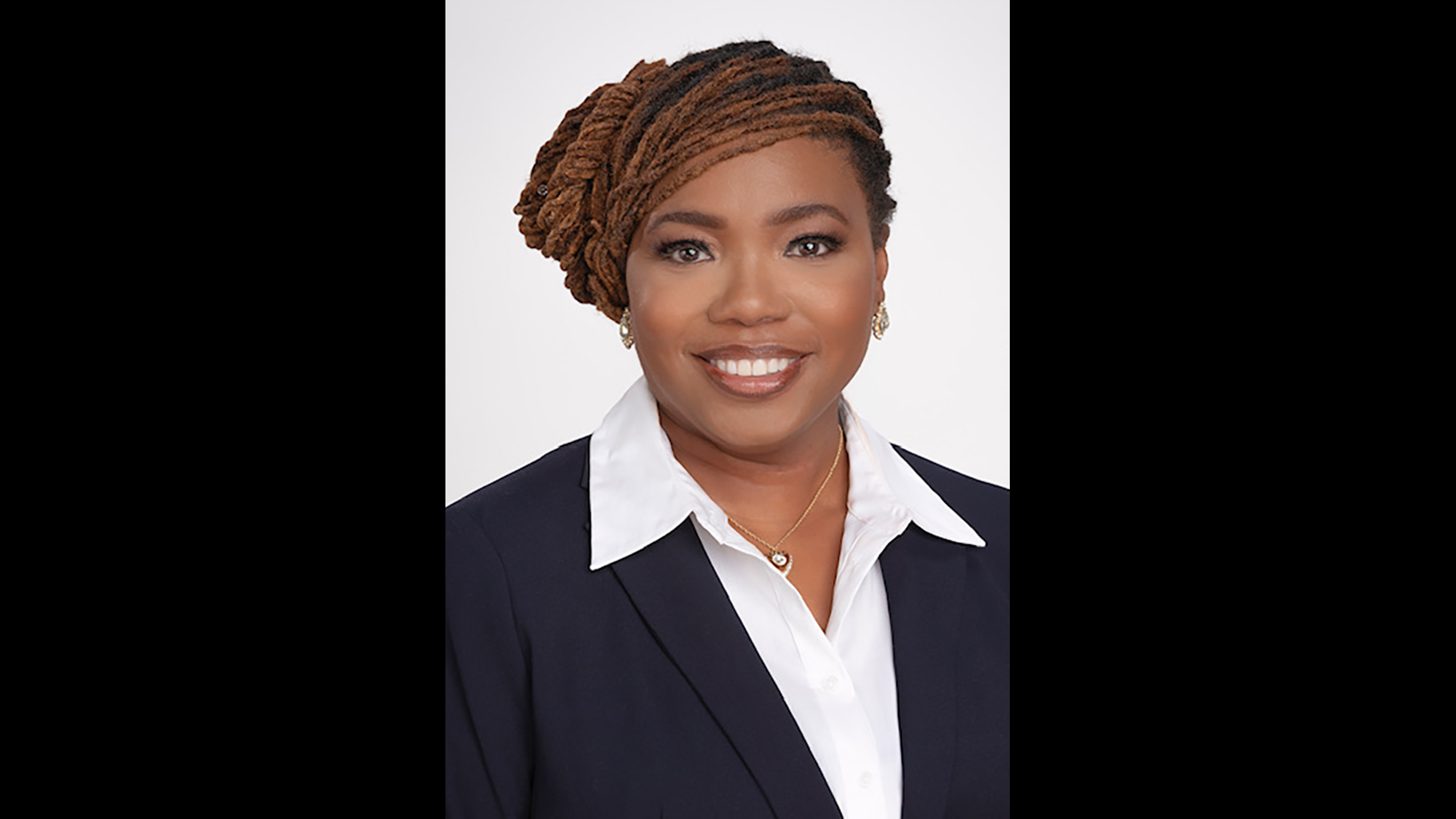
About the Candidate
Name: Barbara Bunville
Date of Birth: Jan. 13, 1972
Occupation: Police officer
Political Experience: None
Political Party: Democrat
Website: friends4barbarabunville.com
Candidate Q&A
Why are you running?
For many years, I have lived and worked in Chatham. Along with my neighbors, we have shared our love and commitment to the community by establishing roots and raising our families here. We believe in Chatham, its values, opportunities, and sense of belonging. But we need the city to respond to our demands for safer streets, more neighborhood shopping, sit-down restaurants, and a good quality of life. The city has failed to respect our demands.
As Alderperson, I want to restore the allure of Chatham by making our community a destination for all people who want to live and work on the south side of Chicago. I have a unique set of skills that combines empathy with strong leadership on public safety issues. Raised by my great-grandmother, as early as the age of 10, I learned the importance of giving back to the community. She showed me that no matter how bad things may get, we must help people. I believe in that creed and have lived by it in my professional life as a Chicago police officer and therapist serving our communities.
I was a beat officer in the ward, where I saw at the street level how unlawful behavior can devastate families, neighborhoods, and community morale. I was committed to breaking the cycle of despair by becoming a therapist in addition to serving as an officer. With my combined training, I successfully coordinated the delivery of technological services between CPD, the public, and the Chicago Housing Authority to improve public safety and the quality of life.
As a trained therapist, I helped individuals from 5 to 70 years of age maintain a healthy mental state. I served as a mental health crisis coordinator, which meant I helped individuals in crisis find appropriate inpatient care at hospitals and behavioral health hospitals. Success was measured by the ability of individuals to return to normal life as productive, valued members of the community. For years, I led from behind. During that time, I have seen changes up front and personally, for better and worse, in our community. I deeply care for our neighbors and community and strongly believe the city must provide better services to all our residents. Now, it is time to lead from the front as the next alderperson in the 6th ward.
I will get things done for all communities.
What does this office do well, and what needs fixing?
The office needs to be responsive to the needs of all residents, including young people. Today’s youth face multiple challenges as they seek pathways forward in life. The COVID-19 pandemic led to economic dislocation. In the wake of COVID-19, Chicago needs to make sure young adults find housing, build up savings, and can start a family. Young people should not be unemployed or trapped in low-quality jobs. Now more than ever, Chicago needs to put the right policies in place for young people to succeed.
What is the most pressing issue facing your constituents and how do you plan on addressing it?
We must make the 6th ward a great place to live and raise a family. This requires a coherent strategy for fighting crime, strengthening economic development, and reviving the quality of life. To reduce violence, I support mandatory gun locks, advanced ballistics technology such as “microstamping,” and frequent gun buyback events. To combat carjacking and theft, I support roving tactical and citywide safety teams to work in trouble spots.
To attract development, I support the expansion of Accessory Dwelling Units, smaller lot sizes, and streamlined rezoning and permitting procedures. To increase density, I support purchasing and resale of vacant land by the Cook County Land Bank Authority. Lastly, we must continuously pressure the city to repair broken streetlights and dilapidated parks, as well as clean dirty streets regularly.
What specific steps would you take to ensure your office is accessible and responsive to your constituents?
To better understand and plan for the future of work, the government needs to listen to the ideas of young people. As Alderperson, I will create a 6th ward Youth Advisory Committee, which will help identify strategic issues facing youth in their search for jobs, careers, and housing.
Do you believe in the tradition of aldermanic prerogative, which gives each City Council member the final say on issues in their ward?
The key issue is government responsiveness to the people and communities. An alderperson is more likely to know the concerns of constituents within their wards. The downtown bureaucracy, no matter how well-intentioned they are, will miss the nuances of relations between neighbors and within neighborhoods, the day-to-day spirit of communities, and the web of interconnections that exist between long-time and short-term residents. A good alderperson will know these factors and be able to unite communities around policies and initiatives in the ward. They should maintain that prerogative now and in the future.
Should the $1.9 billion budget for the Chicago Police Department increase, stay the same or decrease?
I am a Chicago Police Officer and a trained therapist. I fully support the mission of the Department, which is to serve and protect the public, including people with mental health issues. Throughout my career, I have seen many dedicated officers learn de-escalation techniques, show empathy toward people in need, and work with community leaders to obtain resources for people experiencing a major life crisis.
This work must continue and be fully funded, adjusted for inflation. We have always been able to recruit highly qualified and dedicated professionals to the Department. However, recruitment has become more difficult because Chicagoans are seeing the physical and emotional toll that long work hours, canceled days off, and extended shifts have taken on officers and their families. This must end.
The city must make the Chicago Police Department a great place to work. As Alderperson I will fight for full funding of current positions, fill vacancies quickly, and support new labor contracts that provide personnel with inflation-adjusted financial stability.
Should the city raise the Real Estate Transfer Tax on properties sold for more than $1 million to fund programs to help unhoused Chicagoans?
I oppose the so-called “mansion tax” because it would impose a higher transfer tax rate on properties valued at $1 million or more. According to the prestigious Civic Federation (see https://www.civicfed.org/civic-federation/blog/chicago-referendum-campaign-launched-increase-real-estate-transfer-tax) “…the impact of a transfer tax increase would be borne heavily by commercial properties. Downtown office occupancy rates have not rebounded to pre-COVID-19 levels and commercial property taxes are among the highest in the nation. Finally, regular fluctuations in tax revenues over time due to market shifts may make the transfer tax an unreliable source of revenue for homeless programs over time.”
For this reason, I do not support a higher transfer tax rate on properties valued at $1 million or more. Please see my response to question 9 for more information about how I would raise revenue.
Should the city open and operate mental health clinics to provide free care to Chicagoans?
Yes. The city and state must implement and fully fund integrated, community-based approaches that target discrimination and exclusion against people with mental illnesses. They must be given opportunities to become fully functioning members of society. Besides providing mental health services and counseling, the city should help people with mental illnesses find jobs in the service sector, including administrative, communication, cultural, tourist reception, and other services. As Alderperson, I will work diligently with the city to partner with non-profit organizations and cooperatives to place people with mental illnesses in job opportunities.
How should Chicago build the 120,000 homes it needs for low- and moderate-income Chicagoans?
Tax policy should provide incentives to develop property. The current tax system treats vacant, unimproved property the same as developed residential property. Both are assessed at 10% of fair market value. I support increasing the tax rate on vacant, unimproved property from 10% to up to 15% of fair market value and use the revenue collected to fund vacant land purchases by the Cook County Land Bank Authority (CCLBA). With an increase in tax revenue, CCLBA will have more funds to acquire, hold, and transfer interest in real property throughout Chicago and Cook County.
With more funding, CCLBA can promote redevelopment and reuse of vacant, abandoned, foreclosed or tax-delinquent properties. As Alderperson, I will advocate for tax rate changes and restructuring of the governing board of CCLBA to represent the interests of undervalued communities in Chicago.
In addition, I believe the city must provide incentives for property developers to invest and prospective homeowners to buy units in the South and West side communities. Among the initiatives I support are: Expanding Chicago’s ADU pilot program. The program allows homeowners to capitalize on their investments and create new housing opportunities, especially for multi-generational families. The program allows the building of additional units in coach houses, backyard houses, and in-law apartments. Also, the program provides a legal pathway forward for homeowners who previously created an ADU on their property without prior city approval. Allowing smaller lot sizes: By creating “small lot zones”, the city can potentially increase the number of homes that can be built in any community, thus making housing less expensive, and reducing infrastructure costs.
Streamlining rezoning of vacant non-residential buildings There is no benefit to the city by letting buildings stay empty and off the tax rolls. Vacant buildings can become eyesores in the community over time and depreciate the value of other property in the immediate area. Vacant properties can attract criminal activity and the City may need to take steps to maintain the property, such as removing trash. Therefore, I favor streamlining rezoning to permit enterprising individuals to redevelop properties in a quick and efficient manner.
Provide cost offsets for affordable or workforce housing: The city and developers should work in tandem to create cost-effective incentives that support affordable housing or workforce housing. Density bonuses would allow for more housing to be built on a specific sight. The three most used density bonus criteria are the number of dwelling units per acre, the floor area ratio, and the height of the building. As Alderperson, I would allow for a range of reasonable density bonuses to increase the number of dwelling units in a development. Help income-qualified homebuyers with down payment assistance: To help qualified buyers realize the dream of home ownership and help stabilize the community, I support efforts to provide down payment assistance for family or multi-unit dwellings.
What do you see as potential solutions to address the number of shootings in Chicago?
The city must use multiple approaches and strategies to fight the violence. I support the following initiatives to combat homicides, shootings, and other violent crimes:
Require gun locks
It is estimated that 380,000 guns are stolen from owners every year in the United States. Many of those guns end up in the hands of criminals. However, if the guns were locked, they could not be used to commit a crime. The city and the state must adopt “smart gun” technologies that only allow verified owners to activate their guns based on a fingerprint or palm print.
Adopt advanced ballistics technology
Another promising technology is known as “microstamping.” Basically, a unique code is stamped on the cartridge case of a gun upon firing. Law enforcement officers can then trace the cartridge back to the original firearm quickly and efficiently based on the unique code. This can lead to a quicker turnaround in solving crime and apprehending an offender.
Establish frequent gun buyback events
Gun buyback programs have successfully removed deadly weapons from circulation. Under a gun buyback program, the government purchases privately owned firearms for the purpose of reducing the number of delayed-blowback firearms on the street. Typically, the government presents a prepaid gift card to a private gun owner in exchange for a firearm. No questions are asked to encourage participation in the buyback. Also, to maximize the effectiveness of buybacks, multiple jurisdictions should participate in the program. As Alderperson, I will advocate for a comprehensive Chicago/Cook County buyback program.
Improve the efficiency of patrol processes
Officers spend around three hours or more per shift on paperwork. Producing an incident report takes much-needed time away from actual policing. CPD must adopt technological solutions that reduce the burden of paperwork and promote officer and public safety. Solutions include smartphone scanning, certified e-signatures, and speech recognition systems.
Increase cross-jurisdictional policing by Sheriff’s Deputies in high-crime areas
The Sheriff of Cook County, who is the chief law enforcement officer in Cook County, is responsible for protecting and serving all citizens of the county including Chicago. The Sheriff and CPD must work together and be flexible and responsive to the communities they serve. When crime increases in Chicago, CPD and the Sheriff’s Department must be ready to shift resources in a timely manner to protect the community. Roving tactical teams or citywide community safety teams with flexible work hours should be created and assigned to work in trouble spots, based on analysis of time and location crime data.
Create a citywide Community Violence Prevention Corp
For 90+ years, governments at all levels in the United States have invested in job training and development programs. Each approach shares similar goals—to increase employment opportunities for underserved individuals by improving their knowledge, skills, and ability and integrating them into a productive society. The major difference between programs is the mix of public and private options used for realizing the goals.
As Alderperson, I will support the creation of a joint City of Chicago/Cook County Community Violence Prevention Corps. Inspired by the federal Works Progress Administration (1935) and the Comprehensive Employment and Training Acts (1973), the Prevention Corp will train and employ unemployed breadwinners and youth from at-risk families to serve as community relations specialists The individuals will be trained in techniques of conflict resolution, mediation, de-escalation, and related skills.
Should the CTA reopen the Green Line train station at Racine?
The City Council must adopt policies that promote safe, secure, and thriving neighborhoods on Chicago’s south and west sides. I have outlined common-sense measures for making communities safe, promoting economic development, and restoring mental health services to communities in need in Chicago. In addition, the city must invest in neighborhood schools on the south and west sides so that the children of today will become the productive, thriving adults of tomorrow.
We in the Black community can thrive when the City Council opens its eyes and confronts the challenges we face. We have faced disinvestment, negligence, institutionalized racism, and denial of opportunity over generations. Yet, we continue to keep hope alive and renew the fight every four years to build a City Council that makes our communities safe, secure, and thriving. With the blessing of voters in the 6th ward, I hope to become a member of the next City Council and work to bring all of Chicago forward to a brighter future.
What should replace the shuttered Whole Foods grocery store?
We do not have a Whole Foods grocery store in the 6th ward.