



- prev candidate
- next candidate
Candidate Q&A
Why are you running?
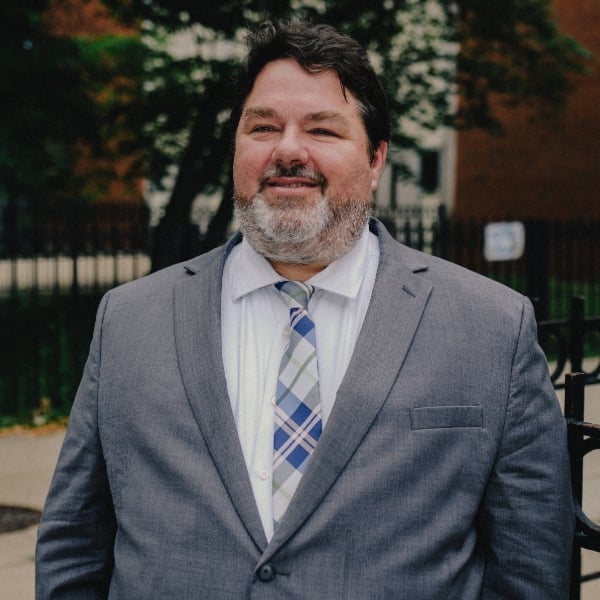
I’m running for reelection to the CPS Board in District 1A because I’ve spent my life showing up for this community — as a parent, organizer, and public servant. I served ten years on the Dever Local School Council, where my own children came through the CPS system, and served as a commissioner for the Northwest Home Equity Assurance Program. Before that, I was a reporter and helped organize my newsroom’s first union.
Since 2019, I’ve been a full-time parent while remaining deeply engaged in the Northwest Side — coaching youth basketball, leading Cub Scouts, and organizing with the 38th Ward Democrats and United Northwest Side. I’m running because our schools deserve a board member who understands that community building happens through the everyday work: listening, organizing, showing up, and following through. I’ll bring that same hands-on accountability to CPS and continue fighting for strong neighborhood schools, responsible leadership, and opportunities for every student to succeed.
Are you in support of the most recent CPS budget that relies on uncommitted state funding?
I voted for the budget with the state revenue because I oppose taking resources away from students and schools. For years, the state has failed to fully fund public education, leaving school districts to make difficult choices with limited resources. I believe students should not bear the consequences of that failure. As a school board member, I will do everything I can to hold the state accountable for meeting its responsibility to adequately and equitably fund public education.
At the same time, we must be responsible stewards of every dollar available to our schools. Our priority should be making sure funding reaches classrooms and supports the services students need most, including strong academic programs, mental health resources, special education, and safe, supportive learning environments. Students should not have fewer opportunities because billionaires and powerful interests have the ability to influence the tax code in their favor. Public education should work for every child, regardless of their ZIP code or family income.
How will you work with CPS officials and staff to balance the district’s budget?
I have been working closely with the new CPS chief lobbyist to help increase CPS revenue without burdening the middle class. I support Supt. King’s efforts to help parents advocate for CPS with their state legislators.
Other than the budget, what is the single biggest issue facing Chicago Public Schools?
The top goal is improving academic success. When we set that as a goal and then communicate our progress toward that goal, we will set up a positive cycle of transparency and improvement.
What is a top issue for students, schools and families in your specific school board voting district?
Having the resources that set up students, schools and families for success. Parents want student support. They want a holistic education. They want a school building that has modern facilities.
If you accept campaign contributions from special interest groups, how will you maintain independence from those donors?
People can trust that I’m putting students first because I’ve been doing that for 10+ years as an LSC volunteer and education activist. I’m not backed by billionaires that I have to be beholden to.
How can current board policies and procedures be improved?
Campaign contributions will never buy access or influence my decisions as a School Board member. I will make decisions based on what is in the best interests of students, families, educators, and taxpayers — not on who supported my campaign. I will follow all applicable ethics and disclosure requirements, recuse myself when a genuine conflict requires it, and be transparent about my campaign contributions.
Current Board policies should be reviewed regularly to ensure they are clear, transparent, enforceable, and focused on improving outcomes for students. I would prioritize stronger public access to information, clearer timelines for major decisions, and meaningful opportunities for parents, students, educators, and community members to provide input before — not simply after — important votes.
How should CPS and the board work to address declining enrollment?
CPS should address declining enrollment by investing in neighborhood schools rather than treating fewer students as a reason to cut programs or close buildings. Declining enrollment is often connected to broader issues like housing costs, population changes, school funding, and families being pushed out of their neighborhoods. The Board should respond by making neighborhood schools places families want to stay and return to.
That means protecting core programs, expanding special education and mental health services, strengthening arts, athletics, and career and technical education, and ensuring every school has strong teachers and adequate staffing. CPS should also work with the City and community organizations to bring additional resources and services into under-enrolled schools, making them community anchors rather than vacant buildings.
We should also examine enrollment boundaries and access to programs so that resources are distributed fairly. Families should have a meaningful voice in these decisions. Declining enrollment should be met with investment, innovation, and community planning, not simply cuts and school closures.
Do you foresee a need to close some district schools?
I do not believe school closings should be the default solution to balancing the CPS budget. The last major round of school closures did not produce the significant savings that were promised and, according to research and community experience, contributed to neighborhood decline and instability. Closing schools can also disrupt students, families, educators, and the communities that schools serve.
Instead, CPS and the City should look for ways to make better use of existing school buildings, particularly those with lower enrollment. Underused space can become an opportunity to bring community assets directly into neighborhoods, including health services, after-school programs, workforce development, early childhood education, libraries, and other resources for families. This approach can help schools become stronger community anchors while making more efficient use of existing facilities.
Before considering a closure, CPS should exhaust alternatives, engage families and communities meaningfully, and evaluate the long-term educational, financial, and neighborhood impacts. Our goal should be investment and revitalization, not simply reducing the number of schools.
Should CPS implement AI in its classrooms? What, if any, guardrails should be put in place?
We failed to recognize the harm of cell phones earlier enough. Now we have to address the mental-health fallout. The new ISBE and CPS guidelines are a good start. The current AI champions are the people who can profit from it. Our children are not profit centers. We need to better understand AI before unleashing it on them.
The board currently includes one Honorary Student Member. As the board has recently tripled in size, should that number be expanded?
Adding more honorary student members is problematic because state law doesn’t allow student members to vote, rendering the position less impactful. CPS needs to build on already-existing methods of student input such as Student Voice and the 5Essentials survey. Data points such as chronic absenteeism and extracurricular participation can also be students telling us by their actions that they need more support or they don’t feel they fit in at school.
How will you be responsive to student-led issues?
We can improve Student Voice by being sure to reach out not just to outgoing students but also to students who don’t speak up as readily. We can’t, however, wait for students to articulate problems. It’s the responsibility of the adults running CPS to anticipate student needs and to create an environment where students are set up for success.
Did you attend Chicago Public Schools? When/Where?
No.
Have you sent your children to Chicago Public Schools?
Yes, my three children all graduated from Dever Elementary School. One graduated from Rickover Naval Academy. One attended Lane Tech for her freshman year then transferred to Illinois Math and Science Academy.
Have you ever served on a Local School Council? When/Where?
Yes. I served for ten years on the Dever Local School Council, where my own children attended CPS.
Have you ever worked for Chicago Public Schools?
No.
What neighborhood do you live in?
Dunning